The Yellow Bird
Menu
  • home
  • posts
  • portfolio
  • Resume
Menu

Author: Taylor

How to be More Water Wise

Posted on March 20, 2020March 20, 2020 by Taylor

March 22 is World Water Day, and one of the best things we can do for the planet, one another, and future generations is to reduce our water consumption. In the spirit of world water day, I’m going to share what I do to reduce my water consumption and pollution.

Laundry

One of the easiest ways to reduce water consumption is to do fewer, larger loads of laundry. Older top-load washing machines use between 30-45 gallons of water per load, and this adds up quickly for a family doing multiple loads a week. Try and reduce the amount of laundry, by wearing clothes more between washes and doing larger loads.

When the time comes to replace your washing machine, try opting for a front-load washer, which uses 15 gallons per load on average, or a high efficiency washer.

Bathroom

There are many ways to reduce water consumption in the bathroom. One of the easiest thing we can do is to bath less frequently, and take shorter showers. If you bathe/shower everyday, try showering every other day instead. A damp washcloth can help keep you fresh between washes.

The second way to reduce water consumption in the bathroom is to let it mellow. “If it’s yellow, let it mellow. If it’s brown, flush it down,” although there’s a bit of a social stigma, practicing this does reduce water consumption through eliminating unnecessary flushes. Although it can’t be done all the time in all situations, letting it mellow when you can does make a difference in the long run.

What goes down the drain is important. My town advises against flushing any medications down the drain, since the water treatment plant cannot filter out medications, which then end up in rivers and streams. Check with your local municipality about what can be safely dumped down the drains, and the less products generally, the better.

If it’s time to replace your faucets or toilets, try and find low-flow replacements. Low-flow faucets and toilets use significantly less water than their normal-flow counterparts, which saves not only water but money.

Buy Less New

Water footprint of some common goods.

Every item purchased has an invisible water footprint. Phones, clothes, food — all of these require water to produce, and a lot of it. By simply buying less items new — and instead choosing to thrift or forego the purchase — you massively reduce water consumption and contribution to water pollution.

Clothes and electronics are some of the worst offenders. As mentioned in The Cost of Being Fashionable, the textile industry not only uses a lot of water, but is the second largest polluter of clean water worldwide — and there are plenty of good alternatives. On top of reducing your water footprint, buying clothing and electronics secondhand is affordable and keeps items out of landfills.

Aside from water footprint, it’s important to think where an item will end up once its job has been fulfilled. Plastic often ends up in our water systems and pollutes the environment. Avoid plastics and other non-biodegradable materials whenever possible, opting for compostable options instead.

Eat Less Meat

1,800 gallons of water is required to produce one pound of beef. In order to produce meat, not only is water needed directly for the animal, but water is required to produce feed for the animal while it grows. Water used to grow feed makes up the largest portion of meat’s water footprint, and by reducing meat consumption you significantly reduce your water footprint.

Plant products are far from equal in terms of water footprint. Water Footprint’s Product Gallery shows the water footprint of different food products, and breaks down the water consumption by green, blue and grey water usage. Grains, pulses and legumes all have relatively low water footprints, and are great to incorporate into one’s diet to reduce water consumption.

Personally, I tend to avoid tropical fruits, meat and almonds, since they are all water intensive are often shipped long distances to get to my pantry (mangoes and almonds don’t grow too well in Canada). Food items I eat often include potatoes, carrots, beets, cabbage, grains, pulses and legumes, since they have relatively low water footprints.


The water footprint of some common food items. Credit to Printage

Water is one of the most important resources we have on this planet, without it, we wouldn’t be here. Although we have oceans full of water, the amount of potable water is far smaller. The world’s population is expected to keep growing, as will the demand for water. If we want to have clean water for ourselves and future generations, we need to conserve what we have now. We all have a part to play, and small acts on a large scale add up.

Category: Sustainability

Organic Basics: SDGs in Action

Posted on March 1, 2020 by Taylor

The United Nations outlined their twelfth Sustainable Development Goal as “responsible consumption and production,” a lofty goal to achieve by 2030. To achieve this goal, the participation of all stakeholders — from farmers to retailers, to consumers — is required.

SDG 12, Credit to Sustainable Development.

In my last post: The Cost of Being Fashionable, I talk about the many ethical and environmental problems with the fashion industry. The industry overall is toxic — to both people and the planet — but some companies are challenging that. Organic Basics is one of the brands showing that it’s possible to do better, here’s how.

Let’s start with production. Organic Basics lists on their website all the factories used in the production of their clothing and where the factories are located — one can also click on each factory to learn more about production capacity and employee benefits — this is a radical level of transparency not usually found in the fashion industry.

Organic Basics and its factories also take a radical approach to waste reduction. One of the Turkish factories used by Organic Basics, not only reduce fabric scraps through computerised pattern making – they also reuse and recycle all scraps into furniture upholstery.

Organic Basics also ensures that the materials used for their products are procured as sustainably as possible. Although not all of their materials are biodegradable, their nylon is recycled, and their SilverTech™ and Polygiene® are produced sustainably.

Organic Basics environmental impact from 2019. Credit to Organic Basics

According to Good On You, a website that helps consumers find sustainable and ethical clothing brands, Organic Basics, “encourages consumers to reduce their climate impact when using its products. Its use of eco-friendly materials reduces its climate impact and limits the amount of chemicals and water used in production,” and  ships all of its products to buyers in 100 per cent recycled packaging, with carbon neutral worldwide shipping.

Once in the hands of the consumers, Organic Basics continues to keep sustainability in mind. The brand’s SilverTech™ and Polygiene® products are designed to be antimicrobial, reducing how often a garment needs to be washed, increasing its longevity and reducing its footprint.

Information on Organic Basics SilverTech™ fabric. Credit to Organic Basics.

It is also worth noting that Organic Basics offers Climate Credits which consumers can buy to invest in United Nations verified carbon reducing projects in developing countries.

When the time comes to discard a garment, all of the brands organic cotton, recycled wool and cashmere and Tencel™ are biodegradable and compostable, returning to Earth. As for the nylon — it is likely recyclable. Regarding Organic Basics SilverTech™ and Polygiene® products, I could not find information on whether the product is biodegradable, however, because it contains silver fibres, it may not be recyclable.

Organic Basics is one of many fashion companies putting sustainability at the forefront of their operations, but we still need more companies to do the same. Overall, the fashion industry is still extremely unsustainable, and this needs to change.

In the past, all products were manufactured from natural materials, and would return to natural material — cradle to cradle. We can do this again, and by supporting companies who strive to return to a circular economy, and avoiding those who don’t, we are doing our part to build a more resilient society.

Sources:

“Good On You: Organic Basics.” Directory.goodonyou.eco, directory.goodonyou.eco/brand/organic-basics. Retrieved Feb 20, 2020.

Holmes, Taylor. “The Cost of Being Fashionable.” The Yellow Bird, 24 Feb. 2020, theyellowbird.ca/2020/02/18/the-cost-of-being-fashionable/. Retrieved Feb 24, 2020.

“Home .:. Sustainable Development Knowledge Platform.” United Nations, United Nations, sustainabledevelopment.un.org/#. Retreived Feb 25, 2020.

Organic Basics. “Climate Credits.” Organic Basics, us.organicbasics.com/collections/climate-credits. Retrieved Feb 25, 2020.

Organic Basics. “Sustainable Practices.” Organic Basics, us.organicbasics.com/pages/sustainable-practices. Retrieved Feb 25, 2020.

“Sustainability in Textile, Environmentally-Friendly Fabric – TENCEL™ Fibers.” Tencel.com, www.tencel.com/sustainability. Retrieved Feb 23, 2020.

Category: FashionSustainability

The Cost of Being Fashionable

Posted on February 18, 2020February 24, 2020 by Taylor

Clothes found at the average mall are trendy and cheap, but at what cost? Although we may think we are saving by buying inexpensive clothing, the price of making inexpensive clothing is high.

Production

The problem starts at production. Cotton is water and pesticide intensive: excessive water use can put drought prone regions at greater risk, and pesticides have been known to cause cancer and birth defects and pollute the environments with toxic substances.

Dyeing and finishing materials also has serious social and environmental effects. Second to agriculture, the textile industry is the largest polluter of fresh water worldwide. Many of the chemicals used to finish textiles are hormone disrupting and carcinogenic, and workers as young as eight are exposed on the job to these substances without protective equipment.

Image of the textile effluent entering the Citarum River. Credit to: DW.

Not only does cheap fashion come at a steep environmental cost, but a great human cost as well. Brands including ZARA, H&M and Nike all use unfair labour practices. Slave and child labour are common in the textile industry, working over 14 hour days and in some instances being denied breaks. Two out of six textile workers are children.

Physical and sexual abuse are also problems in textile factories. One worker said, “They kick our chairs. They don’t touch us, so they don’t leave a mark that could be used as evidence with the police.” Workers in Britain demanded better labour laws over a century ago, but workers in nations like Bangladesh, China and many more continue to work in similar conditions.

Wear

After production, a garment will be shipped from its country of make to the store shelves, where consumers can purchase the product. Regardless of the material, garments shed tiny fibres into water when washed. Shedded fibres aren’t a problem on their own, but if the garment washed is made of synthetic materials that do not biodegrade, such as polyester, they contribute to micro-plastic pollution in water systems since.

Micro-plastics in water systems can be consumed by microorganisms, and can lead to bio-accumulation that ends with the top predator — which is often humans. One researcher reported to the Independent that “Microplastics were suggested to exert their harmful effects by providing a medium to facilitate the transport of other toxic compounds such as heavy metals and persistent organic pollutants to the body of organisms. Upon ingestion, these chemicals may be released and cause toxicity.”

Another impact during consumer use is water consumption, the average washing machine uses between 20 and 40 litres of water per cycle, and that water needs to be heated, using additional energy. It is important to take into account the impact of washing garments: larger loads, less often is most sustainable.

End of Life

If an item is unwearable it can be thrown away or composted depending on the material. When thrown away, synthetic garments will persist in the environment from anywhere between 20-200 years. Donation and recycling are options as well for garments as well, however, recycling and donating may not be as good as once thought, as this CBC Marketplace explains.

Clothing that’s donated to secondhand shops may be burned in landfills in countries like Kenya. Credit: CBC

Overall, the clothing industry is extremely unsustainable, but it wasn’t always. For centuries, if not millennia, humanity created clothing from natural material and dyes, wore clothing until it could no longer be repaired, and the garments would decompose once discarded. It is not unreasonable to suggest that humanity could return to a cyclical garment industry — coming from and returning to the Earth — but we must do our part. Vote with your dollar, support brands that respect the environment and shop secondhand.

Category: FashionSustainability

Vision Therapy: More Than Meets the Eye

Posted on February 13, 2020February 13, 2020 by Taylor

Dr. Debbie Luk has been working in optometry for a decade and has won awards for her advocacy work in the field, but she says that vision is still mostly misunderstood by the public she serves.

According to the American Optometric Association, vision therapy uses exercises and activities prescribed by a doctor to develop, rehabilitate, enhance visual skills and processes…

This is an article I wrote for the Calgary Journal. To read the full post, please click here.

Category: Interviews

First Nations’ Culture Inspires Artist to Help Youth

Posted on October 21, 2019 by Taylor

Paul Rasporich is a talented artist, but it wasn’t until he started learning about First Nations’ culture and spirituality that he was inspired to use his artistic ability to help local youth.

When he was six years old, Rasporich started drawing, something that he still enjoys to this day. From 1982-1986 he attended the Alberta College of Art and graduated with a diploma in Visual Communication. 

“I want people to feel something and to feel inspired.” 

Rasporich’s artistic abilities span a variety of mediums including: charcoal, watercolour, ink, clay and oil paint. He was short-listed by the House of Commons to paint former Prime Ministers and was considered to paint a portrait of Queen Elizabeth II for her Diamond Jubilee in 2012.

Paul Rasporich and Chief John Snow.

Rasporich was first introduced to First Nations’ culture when he worked at Co-op in Calgary. Rasporich brought bags out for for the late John Snow, Chief of the Nakoda nation.

“I’d often have conversations with him [Chief John Snow] about Indigenous spirituality and outlook and I learned a lot from him and became very interested,” said Rasporich.

Rasporich’s first experience with teaching was when he worked with a class from Morley, Alta. Through art he was able to help his students adjust to public school and express themselves. This led him to go back to school and get his teaching degree at the University of Calgary in 2002.

Another influence in his journey to become a teacher was through medicine man John Stevens. Rasporich met Stevens at the North American Indian Ecumenical Conference, hosted by Chief Snow. Stevens brought Rasporich to a variety of ceremonies, but the one that would affect Rasporich the most was a sweat lodge.

While attending a sweat lodge, Rasporich had a vision that would inspire him to pursue teaching. In his vision, Rasporich saw a great tree and a cliff. 

“This barrier cliff had a bunch of holes in it that represented youth that were not meeting their potential… it was a sad cliff,” explained Rasporich. 

In his vision he also met two Assiniboine men, Walking Buffalo and Black Elk.

“You can do this if you want, you have the ability to do this but we want you to work with youth, not just indigenous, and help,” the two men told Rasporich.

Rasporich continues to work with youth at the Foothills Composite Highschool/Alberta Highschool of Fine Arts, and feels that in some ways his work with young people is more meaningful than his artwork. He says the biggest reward is being able to watch youth thrive in their lives through art and contributing as happy citizens, rather than, “just surviving.”

Rasporich says that it is important for people to find their happiness and potential, and a lesson he would like people to take away is.

“Don’t deprive the universe of who you are. Everybody is unique. And you have unique gifts and abilities and don’t be ashamed of who you are…”

He added, “Be who you are, that’s what the universe wants you to be and that’s just all you have to do.”


To view Rasporich’s art, or for information on his upcoming show at the Calgary Public Library in 2020, check out his website at paulrasporich.com.

Category: Interviews

The Cost of Being Beautiful

Posted on September 7, 2019September 7, 2019 by Taylor

Skincare, hair care, makeup, gel or acrylic nails, nail polish, bleach, hair dye, spa days, threading, waxing, shaving… How many of these things do you purchase and/or use on a regular basis? Do you know where these products come from and what they’re made of? You should, because it matters, and we can’t afford to be blind about our impact globally.

It’s not unusual, especially in developed countries, to spend exorbitantly on products and procedures supposed to make us more appealing and attractive. While it’s not wrong to highlight features that one likes, or to present oneself in a certain way and have fun with appearance, it’s wrong to do so at the expense of other people and of the Planet. The world is becoming increasingly ‘disposable’. When purchasing products, pretty packaging and promising claims take precedence over the products origin, or the circumstances in which the ingredients were obtained and the items produced. Once the products come home, they are applied to the body and eventually washed down the drain without any thought as to what happens while on the skin, or downstream in the ecosystem.

These behaviours are toxic – environmentally, socially, ethically and physically. The harms of the beauty industry are often overlooked – in fact, there is a great effort to ignore and paint over serious industry concerns, even though the use of these products has been ingrained in societies for millennia. Ancient Egyptians used kohl as eyeliner, and both Queen Elizabeth I of England and Geishas in Japan used lead based products for a creamy white skin tone. Today, women and men are bombarded with societal pressure to look a certain way, to the point that it’s a requirement at some jobs or at the very least a strong expectation. While this obviously bodes poorly for self-esteem and confidence, the extent of the damage caused by the beauty industry reaches much farther than many of the most fanatic users are aware of.

  • Plastic Pollution: One of the more obvious effects of the beauty industry is plastic pollution in all forms. The beautiful packaging holding eye shadow palettes together, and to contain various products are rarely ever recyclable, and in the rare case that they are, are often thrown away anyways. This packaging doesn’t biodegrade or decompose and will remain, polluting the planet long after the user has left the earth. ‘Microbeads’ found in many cleansers and exfoliating products are made of tiny pieces of plastic that are not only applied to the skin, but are washed down the drains and enter water ways as most cities do not have adequate facilities to remove these microplastics from waste water. The glitter found in may products is also made of tiny plastic pieces, which once again pollute any environment downstream. The solution here is simple: don’t buy products in plastic packaging or products containing microbeads or glitter. Learn to make your own beauty products and store them in reusable container. If you must buy products, try to buy products in glass or metal packaging and once empty clean and remove labels, then recycle.
  • Human Trafficking: Plastic waste is not the only concern with getting nails done. Human trafficking is a problem, with people forced to work, rarely with pay, in salons in order to fill the demand for cheap manicures and pedicures. That manicure may be cute, and you may have had it done for a bargain, but a good deal for you should never come at the expense of another person.
  • Child Labour: A hidden truth that makeup companies don’t want you to know. Many makeup products contain materials mined by children in unfair and unsafe working conditions. Mica, a common ingredient in many powdered makeup products, is one of these materials. Companies don’t have to disclose where all the raw materials for products are sourced, so consumers have no way to know if their favourite products contain ingredients mined by children, or others in unfair conditions. In order to not contribute to the use of child labour, it is critical to avoid ALL products containing mica, and look into ‘ethical’ companies and do your own research to ensure that the company operates by their claim.
  • Exploiting Poverty: Synthetic hair extensions contribute to plastic pollution as hair sheds into the environment during daily activities, so one might think that the better alternative would be natural hair extensions. The issue with this assumption is that it assumes that the people donating their hair are getting a fair price for what they are selling, this unfortunately, is rarely the case. The hair used for extensions is frequently purchased from women in developing countries, and companies often under pay the women for their hair, and then charge high prices. Hair extensions are not necessary, and if you feel you must, conduct thorough research to find a company that pays fairly for hair and spend the extra money to ensure that a wig or extensions are not contributing to a cycle of poverty for the sake of ‘beauty’.
  • Down the Drain: All the products applied to the body end up in the drain at some point. Many products available in stores contain a multitude of harsh, synthetic chemicals that are often washed down the drain without thought. Municipal waste water treatment plants are unable to filter out the chemicals that are flushed away*, and thus these substances enter the aquatic ecosystem where they pollute the environment and in many cases cause damage. In a large city there may be millions of people washing away a variety of substances including bleach, dye, cleansers and makeup and medicated creams. If you would hesitate putting even small quantities of products in a fish tank or your pet’s water, it should not go down the drain.

There’s clearly nothing pretty about about exploitation of people and the Planet. Although the beauty industry has made us all feel as though we need this or that to be beautiful, it’s all a lie. The trait that is almost universally considered most beautiful isn’t red lips, even and clear skin, or shiny hair – it’s confidence, and these industries aren’t helping. The goal of these companies is to make you feel inadequate, so that they can tell you that the solution is a cream to fix your fine lines, or a mascara to make your eyes look bigger. You ARE beautiful, period, and it’s not because of the products. It can be intimidating to stop, but buy relying products to feel beautiful you are a slave to the companies that provide them, and contribute the their practices. The less you use, the less you contribute to environmental destruction and the better you feel as you realize that you are inherently beautiful and what’s ugly is the industry telling you otherwise. Whatever you perceive as flaws are the things that make you human and the things that make you beautiful. Let that hair grow naturally, grow your nails out, let your skin breathe and show the industries that have been making you feel inadequate that you are more than beautiful enough.


*The town that I live in is often hailed by those living within it for having excellent waste water treatment, so good that many say, “the water that leaves the town is cleaner than the water that enters.” While Canadian regulations and regular inspections ensure that this is true, the town still advises against flushing medication and other substances stating that these will eventually end up in the rivers and streams. This advisory against flushing medication likely extends to other substances that people often wash away without thought.

Category: Sustainability

Six Ways to Save the Amazon

Posted on August 29, 2019August 29, 2019 by Taylor

The Amazon rain forest has been ravaged by forest fires this year. While fires occur every year in the Amazon, this year the fires seem to have caught the attention of Western media, largely due to these fires not being started naturally, but the result of deliberate actions to clear land for agricultural use.

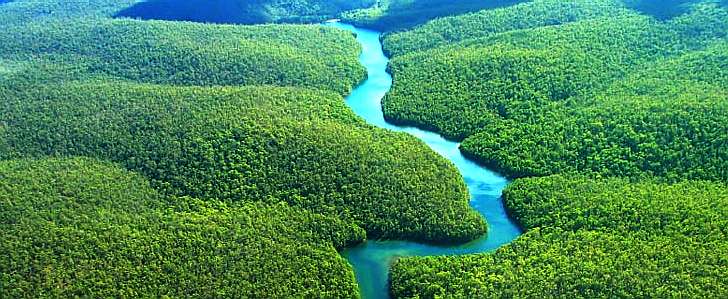
The largest rain forest in the world, the Amazon basin covers around 40% of South America and is where hundreds of aboriginal groups live. Also home to millions of species (equivalent to 1 in 10 known species worldwide) including jaguars, monkeys, and pink river dolphins, it is one of the most bio diverse places on the planet. On top of the incredible biodiversity within the Amazon, the Amazon produces approximately one fifth of the worlds organically produced oxygen annually and is a critical store of carbon for the planet.

The Amazon is vital, not only for the survival of the species and people who live within it, but for the entire planet. The nickname, ‘lungs of the Planet’ is apt, and yet many don’t appear to be concerned. The Brazilian president is demanding an apology before accepting international aid to fight the fires, and many developed nations are neglecting to acknowledge the major roll that places like Canada, the USA, and the EU play in deforestation globally. World leaders are showing an alarming apathy toward this crisis, and the larger climate crisis that these fires represent.

So what can be done? The acts of one may be small on their own, but millions of small acts can have a great impact. Here is just a short list of some of the things ordinary people can do to help save the Amazon and beyond.

  • Avoid processed and fast food meats: Major corporations sometimes use cheap, Amazonian beef for processed meats ranging from hot dogs, to hamburger patties, by boycotting these processed meats it shows the Brazilian government that there is more money in protecting the Amazon than there is in destroying it. Deforestation due to demand for beef accounts for over half of all deforestation in the Amazon. While going vegetarian or vegan are the best options environmentally, it goes a long way to simply eat local meat. If the meat isn’t local (and especially if it comes from Brazil) or it isn’t stated where it’s from, don’t buy or eat it.
  • Don’t purchase products containing palm oil: The demand for palm oil is a major cause of deforestation in rain forests in South America as well as Asia. Refusing to purchase any products containing palm oil is one of the best ways to help protect the planet’s rain forests because it gets to the source of the problem: demand for one of the largest causes of deforestation globally.
  • Soy, sugar and bananas: Are just some of the other agricultural drives for deforestation. Avoid buying them when possible, and if you must, try to buy them from companies that are certified by the Rainforest Alliance to reduce personal contributions to deforestation.
  • Write to government: Send a letter to local representatives and party leaders and let them know that their constituents are concerned with what the government is permitting. Governments can’t be expected to act on behalf of their voters properly if their voters aren’t telling them directly what they want done.
  • Sign and share petitions: Petitions by trustworthy organizations help by gathering the voices of people who may not be heard otherwise. If enough people sign a petition, these groups can then present the petitions to governments and organizations with the voices of thousands of concerned individuals.
  • Share with others: It is crucial to not only share about the fires themselves, but share about how people and countries are contributing to them. The attention currently being brought deforestation is good, but much of the blame is being placed on a government that is only destroying forests because there is an international demand for products. It is important to not only focus on putting out the fires, but to focus on solving the root of the problem. Governments like France’s and Canada’s are putting a Band-Aid on a gaping wound by giving money and resources to fight the fires (which is still good), when they could be finding ways to ensure that products linked to deforestation aren’t coming into their countries.

If we are to protect the rain forests, then we all need to take more responsibility for what we are contributing to, and turn that into daily actions that reduce our negative impact on the world around us. The steps outlined here are just the start, if we are to protect the Amazon and other ecosystems globally, we need to constantly be questioning the daily habits we overlook and learn about how our actions impact the world. This is not to be done just for the rain forest, but for current and future generations so that they will have to opportunity to discover the beauty of the natural world from more than just books and videos depicting extinct species.

Category: Sustainability

  • February 28, 2026 by Taylor Holmes What are Chinook Winds?
  • January 17, 2026 by Taylor Holmes Backyard Friends: Black-capped Chickadee
  • January 1, 2026 by Taylor Holmes New Year Update!
  • November 27, 2025 by Taylor Holmes Endorheic Lakes: The lakes that go nowhere
  • November 17, 2025 by Taylor Holmes The Death of the Prairies
  • YouTube
  • Instagram
  • TikTok
  • Tumblr
  • LinkedIn
©2026 The Yellow Bird
 

Loading Comments...