A lake is a large body of water surrounded by land and not connected to a sea or ocean… but there are thousands of lakes that, for the most part, hold no water?
These are known as ephemeral lakes, and despite arguably not being a lake much of the time, these temporary water bodies are vital to many of the world’s ecosystems and cultures.
Table of Contents
What are Ephemeral Lakes?
Merriam-Webster defines ephemeral as, “lasting a very short time” — and that’s exactly what ephemeral lakes do!
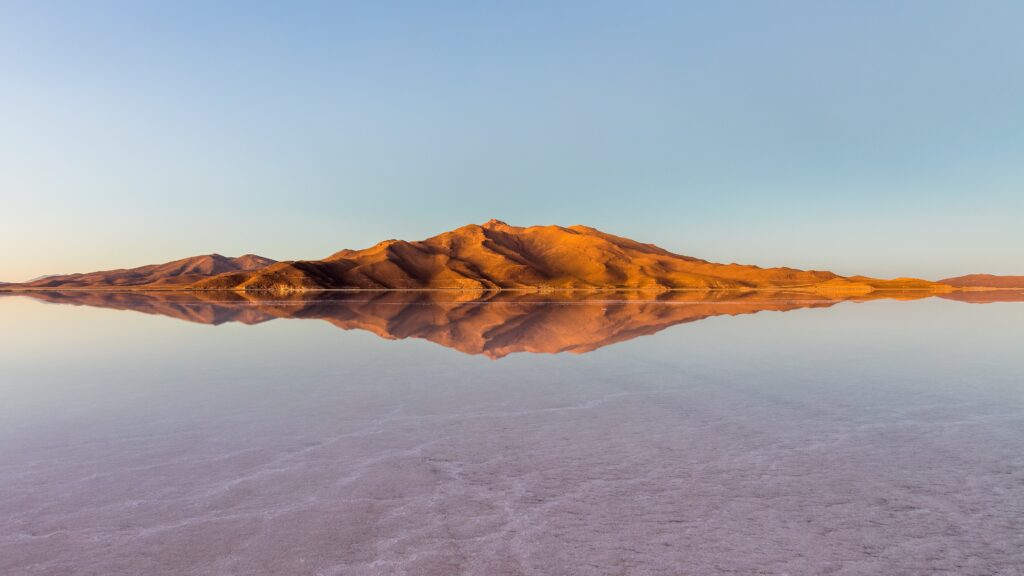
Also known as playas, pans, chottes, and sebkas, ephemeral water bodies flood episodically, but are dry for extended periods. When there’s abundant rainfall and runoff, water flows and fills the basin. In dry periods when evaporation exceeds inflow, the lake shrinks until all that’s left is a dried lake bed. Some flood seasonally, others only fill a few times a century.
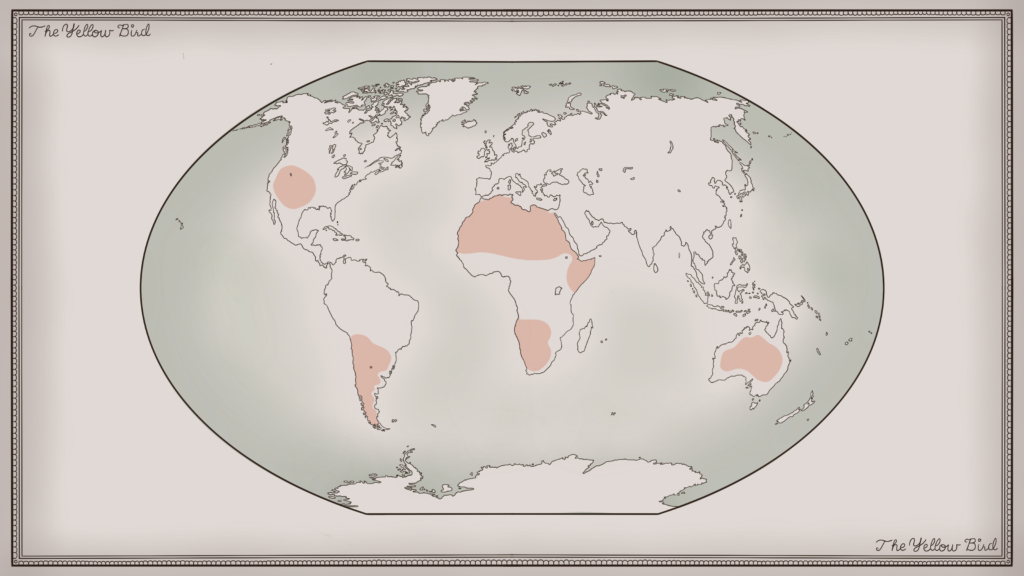
Ephemeral lakes are mostly found in semiarid and arid environments around the world. Low precipitation and high evaporation in deserts promote the infrequent formation and inevitable desiccation of these lakes.
Why are They Important?
Despite their fleeting nature, ephemeral lakes are incredibly important to both people and the planet.
"If there is one generalization that can be made about arid and semiarid environments, it is that episodic events have a greater impact on the ecosystems and landscapes than the cumulative effect of 25–30 years of events within the 'average range.'"
Ecology of Desert Systems (p. 99)
This is known as a “pulse-reserve paradigm”. During extended periods of drought, desert organisms limit their activity. Life proliferates or pulses with abundant rainfall. The gains made during these brief favourable periods carry organisms through harsher times. Infrequent, intense rainfall events turn ephemeral water bodies into temporary oases.
Ephemeral Water Bodies
Now that the basics of ephemeral lakes are out of the way, let’s explore three ephemeral lakes, their ecosystems, history, and importance.
Kati Thanda-Lake Eyre
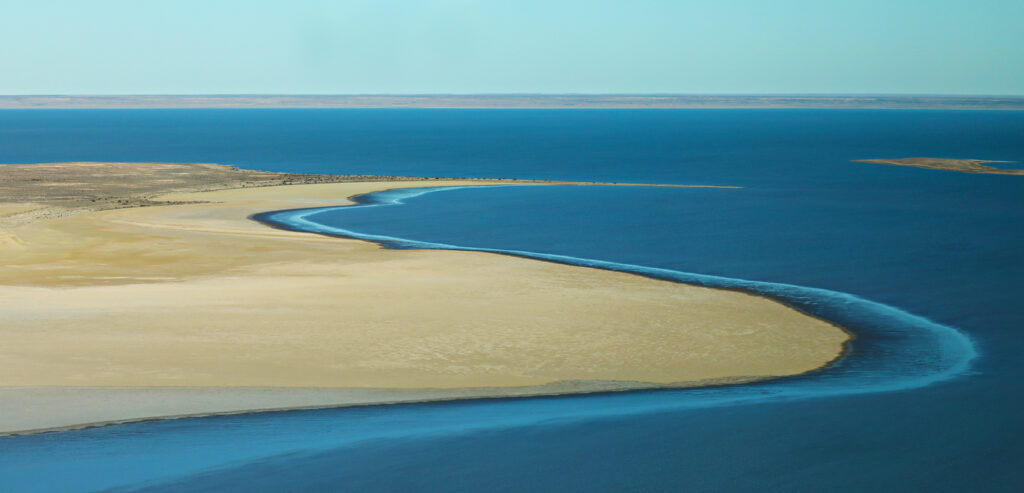
Region: Simpson Desert, South Australia
Nation(s): Australia
Climate: Extremely Arid (~127mm rainfall annually)
Basin: Lake Eyre Basin (1,400,000km2)
Lake Type: Endorheic (Saline-Hypersaline)
Area: ~9,700km2
Main Tributary(ies): Georgina and Diamantina rivers (via the Warburton River), Cooper Creek (including the Thomson River). Many of the rivers in the basin dry out before reaching Kati Thanda-Lake Eyre.
Status: Protected as part of Kati Thanda-Lake Eyre National Park.
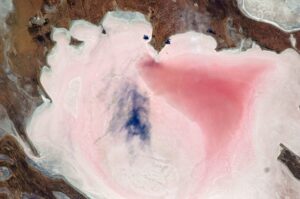
Kati Thanda-Lake Eyre is the largest ephemeral lake in the world and the largest lake of any kind in Australia — When it’s full, which has only happened a few times in the 160 years since recording began.
The lake lies within Australia’s arid region, specifically the Simpson Desert. Temperatures in the area range from 21-37C, and evaporation rates exceed 3,500mm per year.
FUN FACT: With its lowest portion lying 15m below sea level, Kati Thanda-Lake Eyre is the lowest point in Australia!
When full Kati Thanda is about as salty as seawater, but becomes hypersaline as it dries and salt concentrates. When the lake dries it leaves a thick salt crust exposed that is 15 inches thick in some places.
The first recorded fill occurred in 1950, with the others occuring in 1974 and 1984. Partial fills happening more frequently. As of May 2026, Kati Thanda is currently filling and it may overflow in the coming months.
This hostile environment around Kati Thanda is not entirely desolate. The surrounding floodplains, waterholes and wetlands sustains the life tough enough to stake its claim in the outback
Mammals: Red Kangaroo (Osphranter rufus), Hill Kangaroo (Osphranter robustus), Short-beaked echidna (Tachyglossus aculeatus), Dingo (Canis lupus dingo, Canis dingo), Fat-tailed Dunnart (Sminthopsis crassicaudata), Kultarr (Antechinomys laniger), Spinifex hopping Mouse (Notomys alexis), Long-haired rat (Rattus villosissimus), Inland broad-nosed bat (Scotorepens balstoni), Little brown-nosed bat (Scotorepens greyii), Gould’s wattled bat (Chalinolobus gouldii)
The most devastating invasive species in Australia (and the Lake Eyre Basin) is the domestic cat — which kills billions of small mammals, birds and reptiles annually.
Feral camels are another introduced species that degrade the environment and outcompete native species by eating the scarce plant life in the basin.
Birds:
Waterfowl: black swan (Cygnus atratus), Australian pelican (Pelecanus conspicillatus), great cormorant (Phalacrocorax carbo), grey teal (Anas gracilis), hardhead (Aythya australis), pink-eared duck (Malacorhynchus membranaceus), black-winged stilt (Himantopus himantopus), banded stilt (Cladorhynchus leucocephalus), red-necked avocet (Recurvirostra novaehollandiae), masked lapwing (Vanellus miles), red-capped plover (Anarhynchus ruficapillus), common greenshank (Tringa nebularia), marsh sandpiper (Tringa stagnatilis), silver gull (Chroicocephalus novaehollandiae).
Other: White-bellied sea eagle (Icthyophaga leucogaster).
Reptiles: inland taipan (Oxyuranus microlepidotus), western brown snake (Pseudonaja mengdeni), black-headed python (Aspidites melanocephalus), carpet python (Morelia spilota), woma python (Aspidites ramsayi), perentie monitor (Varanus giganteus), central netted dragon (Ctenophorus nuchalis), gibber earless dragon (Tympanocryptis intima), bearded dragon (Pogona spp.), sand goanna (Varanus gouldii), long-necked turtle (Chelodina longicollis), blue-tongued Lizard (Tiliqua spp.).
Amphibians: desert tree frog (Colleeneremia rubella), water-holding frog (Cyclorana platycephala), Main’s frog (Cyclorana maini), striped burrowing frog (Cyclorana alboguttata), common spadefoot toad (Pelobates fuscus),
Fish: Hyrtl’s catfish (Neosilurus hyrtlii), desert goby (Chlamydogobius spp.), rainbowfish (Family Melanotaeniidae), bony bream (Nematalosa erebi), golden perch (Macquaria ambigua), spangled perch (Leiopotherapon unicolor).
Invertebrates:
Dunaliella salina is a salt-loving green algae that is responsible for turning Kati Thanda-Lake Eyre’s waters pink and red. Cyanobacteria (Nodularia spp.) are blue-green algae that fix atmospheric nitrogen, making Kati Thanda’s waters nutrient-rich which enables life in the lake.
Aquatic invertebrates including brine shrimp, fairy shrimp, water fleas, copepods, ostracods also live in Kati Thanda-Lake Eyre’s salty waters.
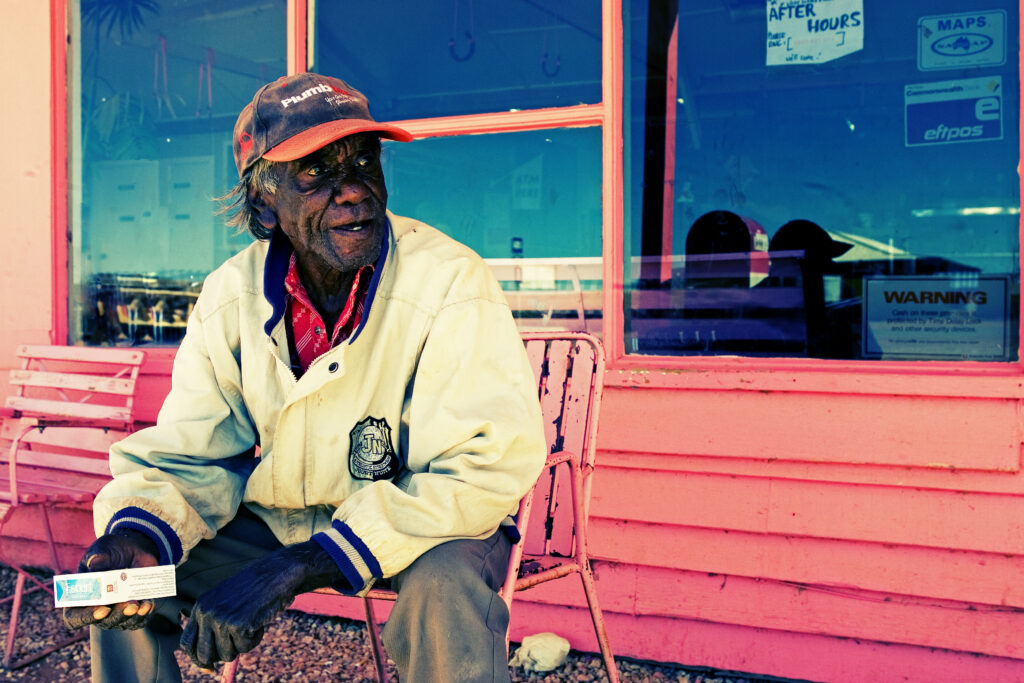
Kati Thanda lies within the traditional territories of several Australian Aboriginal peoples, who have lived in and cared for the area for at least 40,000. The Arabana people hold modern land title to the lake, but Kati Thanda also lies within the traditional territories of the Dieri and Wangkangurru. Though distinct, these groups are related linguistically and culturally, and have shared kinship, trade and ceremonial connections.
Their way of life is governed by the natural cycles of the basin. The intimate relationship and understanding Kati Thanda’s aboriginal peoples have with the land allowed them to survive despite the extreme environment.
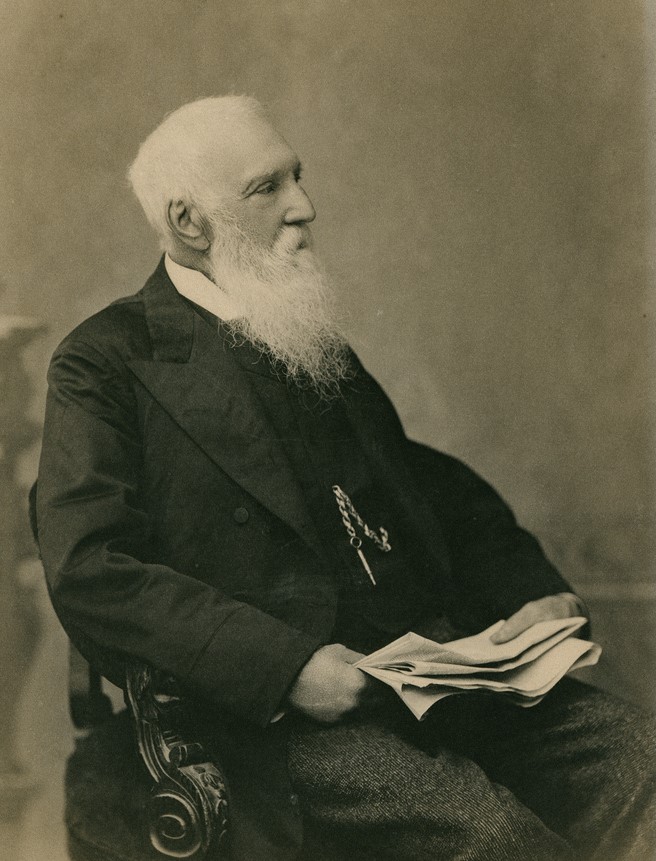
British explorer and colonial officer Edward John Eyre became the first European to see the lake in 1840 — and is whom the lake is named after.
Despite being the first European to see Kati Thanda-Lake Eyre, the lake would have been dry at the time. It would be over a century after Eyre saw the lakebed that the first recorded fill would occur.
Today about 60,000 people live in the Lake Eyre basin — in aboriginal communities, large towns, small settlements, and isolated homesteads on grazing properties. Despite the lack of surface water resources, the Lake Eyre basin lies on top of the Great Artesian Basin, which provides a steady supply of groundwater to inhabitants through wells and aquifers.
The extreme natural cycles of drought and flooding that occur in the Lake Eyre Basin make the region particularly vulnerable. The Australian Department of Climate Change Energy, the Environment and Water list several threats to Kati Thanda-Lake Eyre, including invasive species, resource extraction, and land use changes.
Invasive species including cats and camels directly harm or outcompete native species in the basin. Over-grazing and clearing vegetation damage the ecosystem and make the area more prone to wind and water erosion. The development of roads and tracks impede waterflow in the basin as well.
Resource extraction and mining are a localised threat to Kati Thanda-Lake Eyre, though some measures have been taken to protect the lake. In 2024 the Queensland government introduced the Regional Planning Interests (Lake Eyre Basin) Amendment Regulation, which bans new oil and gas developments within the Basin — an important step in protecting the Kati Thanda-Lake Eyre and all its inhabitants.
Sambhar Lake
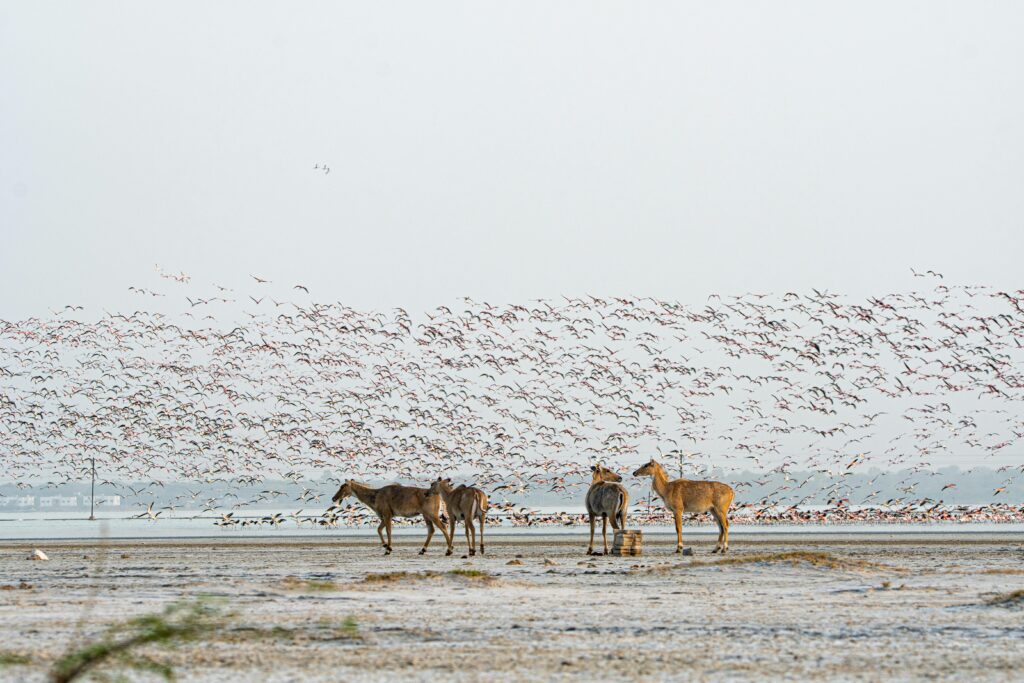
Region: Thar Desert, Rajasthan
Nation(s): India
Climate: Arid
Basin: 5,600km2 (Could not find a name for the basin)
Lake Type: Endorheic (Hypersaline)
Area: ~230km2
Main Tributary(ies): Mendha and Rupangarh Rivers
Status: Protected under the Ramsar Convention. The lake is threatened by industry, namely salt production.
Sambhar Lake is the largest inland salt lake in India. It is located in the state of Rajasthan, and lies withing the Thar desert. This large desert is named after the rolling sand dunes found within.
Sambhar Lake typically floods during monsoon season when there’s enough rainfall and runoff. The average depth is about one metre.
A 5.16km stone-earthen dam divides the lake in two sections. The western portion of the lake is largely undisturbed habitat, while the eastern portion of the lake is developed for salt extraction. During the dry season when the lake evaporates, thick salt sheets are exposed on the lake bed.
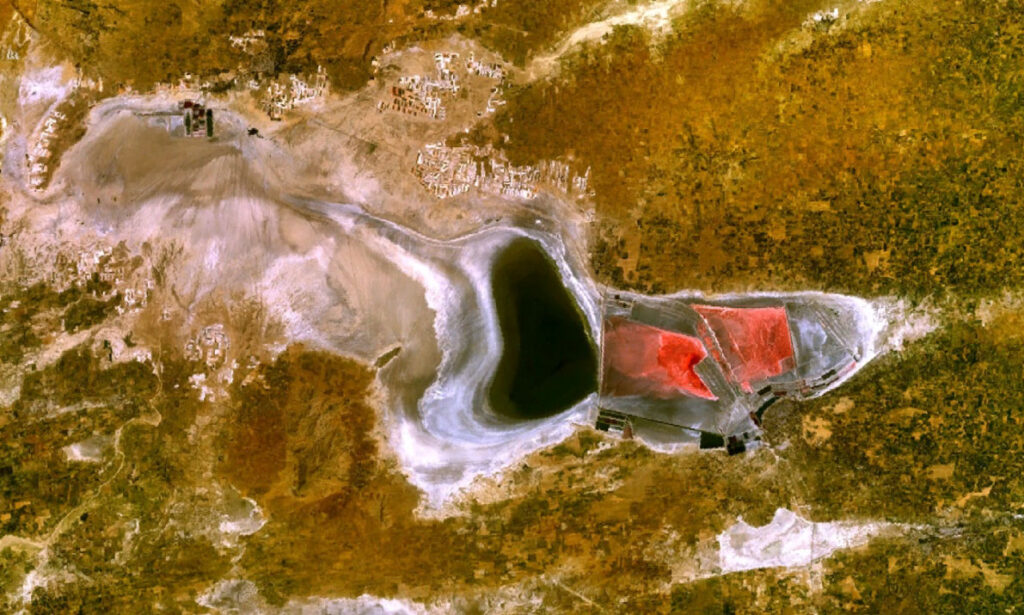
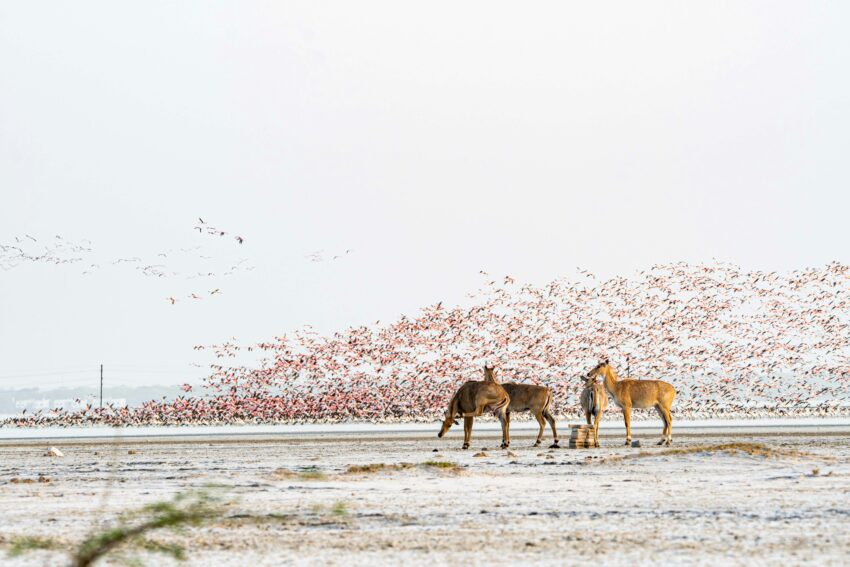
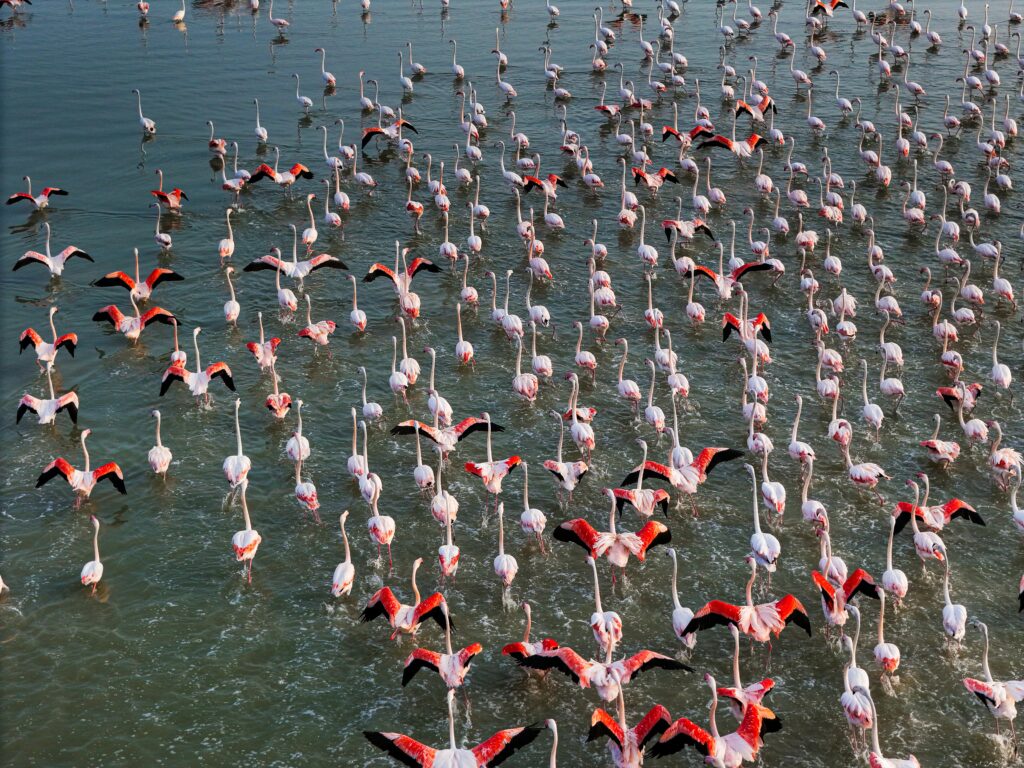
Sambhar Lake is an oasis in the Thar Desert during the wet season. It’s one of the largest flamingo habitats in India, second only to the Great Rann of Kutch. Sambhar lake’s rich biodiversity led to it being designated as a Ramsar site in 1990.
The Ramsar Convention is a international environmental treaty recognizing wetlands of international importance. But the lake is not only important to the region's wildlife
Mammals: leopard (Panthera pardus), striped hyena (Hyaena hyaena), golden jackal (Canis aureus), bengal foxes (Vulpes bengalensis), rhesus monkeys (Macaca mullatta), and hanuman langurs (Semnopithecus entellus), Indian Grey Mongoos (Herpestes edwardsii), Indian hare (Lepus nigricollis)
There are an estimated 7 million domestic animals including domestic cats, dogs, pigs, cattle, sheep, buffalo, camels, goats, donkeys, and horses.
Birds: greater flamingo (Phoenicopterus roseus), lesser flamingo (Phoeniconaias minor), cattle egret (Ardea ibis), black-crowned night heron (Nycticorax nycticorax), Indian pied heron (Ardeola grayii), Eurasian teal (Anas crecca), gadwall (Mareca strepera), pied avocet (Recurvirostra avosetta), black-winged Stilt (Himantopus himantopus), white-breasted kingfisher (Halcyon smyrnensis)
Reptiles: Caspian cobra (Naja oxiana), common krait (Bungarus caeruleus), Indian sand boa (Eryx johnii), Indian rat snake (Ptyas mucosa), Indian chameleon (Chamaeleo zeylanicus), Indian star tortoise (Geochelone elegans)
Amphibians: green pond frog (Euphlyctis hexadactylus), Bufo spp.
Fish:
Several freshwater fish species have been reported Sambhar Lake, entering through streams and rivers during the rainy season. However, these species die out due to the lake’s salinity.
Invertebrates:
Zooplankton are an essential component of this lake’s ecosystem. Various Protozoa, Rotifers and crustaceans inhabit Sambhar.
Several species predatory aquatic beetles (Including Cybister tripunctatus & Eretes sticticus)
For centuries Sambhar Lake has been important to people both culturally and economically.
Traditionally the lake is said to be created by the goddess Shakambari, which is a form of the deity Durga, and consort to one of the three supreme Hindu gods, Shiva. There is a temple devoted to Shakambari along the southern shore of the lake.
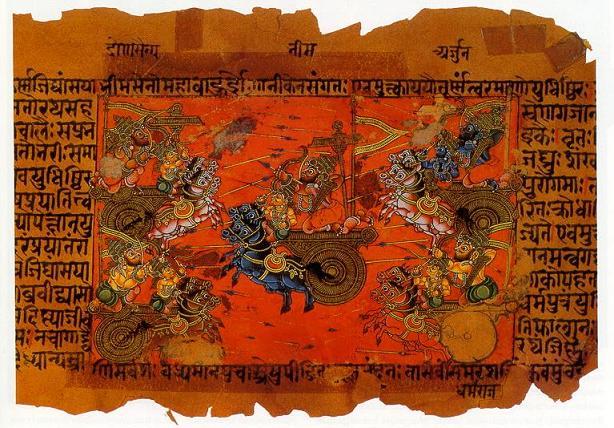
Sambhar Lake is also mentioned in the Mahabharata — an ancient Sanskrit text. It’s said to have once been part of the kingdom of Vrishparva — a Danava or demon king in Hindu mythology. The lake is also where the wedding of King Yayati and Devayani, the daughter of priest Sukracharya, took place.
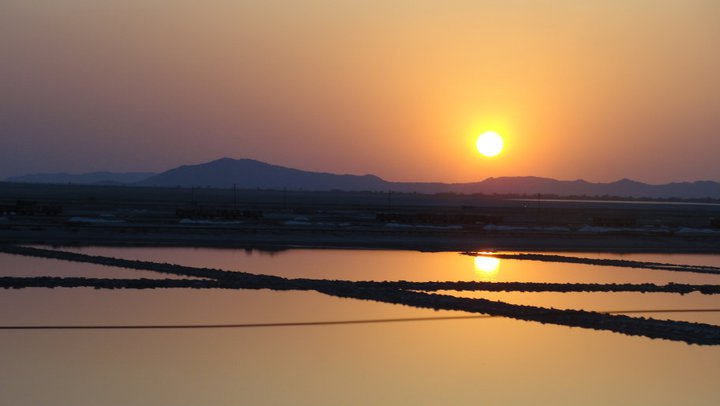
People have been extracting salt from Lake Sambhar for at least 1500 years. The town of Sambhar was founded by the Chauhan dynasty is 551CE. Later, various groups including the Sindhias, Marathas and Mughals harvested salt from Sambhar. In 1709 the lake fell under the control of the Jaipur and Jodhpur princely states, who leased the lake to the British in 1870.
Today Sambhar Lake faces several threats. According to a study by Yadev et al, the most devastating change to the lake has been the construction of a 12.4km road through the western portion of the lake. This road divided once continuous habitat, and this disruption has negatively impacted migratory birds using the lake.
Tourists unaware of the ethics of birdwatching frequently disturb flamingos — sometimes to the extent that they flee the lake. Flamingos are also poached by locals, further jeopardizing populations.
"Sambhar Salts Ltd. officials are devoted to their primary job of salt extraction with no unit deployed to take care of the conservation aspects of the lake."
Yadev et al. p. 443 (2025)
Salt extraction, while a long-standing and vital economic force, also endangers the lake. The salt industry attempts to get rid of algae in Sambhar Lake’s brine pools. This is done to improve the quality of salt produced, but in doing so it destroys a key food source for flamingos.
The region is also undergoing desertification intensified by human activities. Less water is reaching Sambhar Lake as rivers are diverted for irrigation. Deforestation, overgrazing, urbanization, and other unsustainable changes in land use have degraded the environment surround Sambhar Lake.
Sambhar’s situation is complicated, but Yadev et al put forward several solutions that could protect the lake long-term, including:
Stricter enforcement of existing regulations related to water use, land use, salt extraction and hunting.
Integrated water management between agriculture, industry and communities to reduce impact on Sambhar Lake
Habitat restoration of Sambhar Lake and the surrounding area including reforestation and soil conservation.
Community engagement and education. Educate people and industry on the importance of wetland, and get locals engaged in conservation.
Expanding sustainable economic development. This can include sustainable tourism practices that respect rather than exploit wildlife.
Conduct regular research and monitoring to better understand threats and determine effective conservation measures.
Hamoun Wetlands

Region: Iranian Plateau
Nation(s): Afghanistan, Iran, Pakistan
Climate: Extremely Arid (~60mm rainfall annually)
Basin: Sistan Basin (370,000km2)
Lake Type: Freshwater marshes and wetlands
Area: ~2,000km2
Main Tributary(ies): Helmand River Delta
Status: Critical. Protected under the Ramsar Convention, however, extreme drought lasting several decades has completely dried the wetland.
The Sistan Basin is an endorheic basin that spans across Afghanistan, Iran, and Pakistan. Roughly two thirds of the wetland is located in Afghanistan along with most of the water sources, the remaining third in Iran. Most of the information here comes from the Iranian side.
"Despite the importance of the Hamoun wetlands, field surveys on the status of the ecosystem and its health and integrity are difficult and rare due to its location between Iran and Afghanistan and conflicts in Afghanistan. Most studies have been focused on the Iranian side of the wetlands."
Maleki et al. p. 610
The lakes experience seasonal fluctuations in water levels, expanding in the spring following snow melt in the Hindu Kush mountains, though water levels rarely exceed three metres in depth.
Unsustainable water use and variations in year-to-year runoff and precipitation has caused Hamoun lakes and wetlands to dry up completely multiple times in the 20th and 21st centuries.
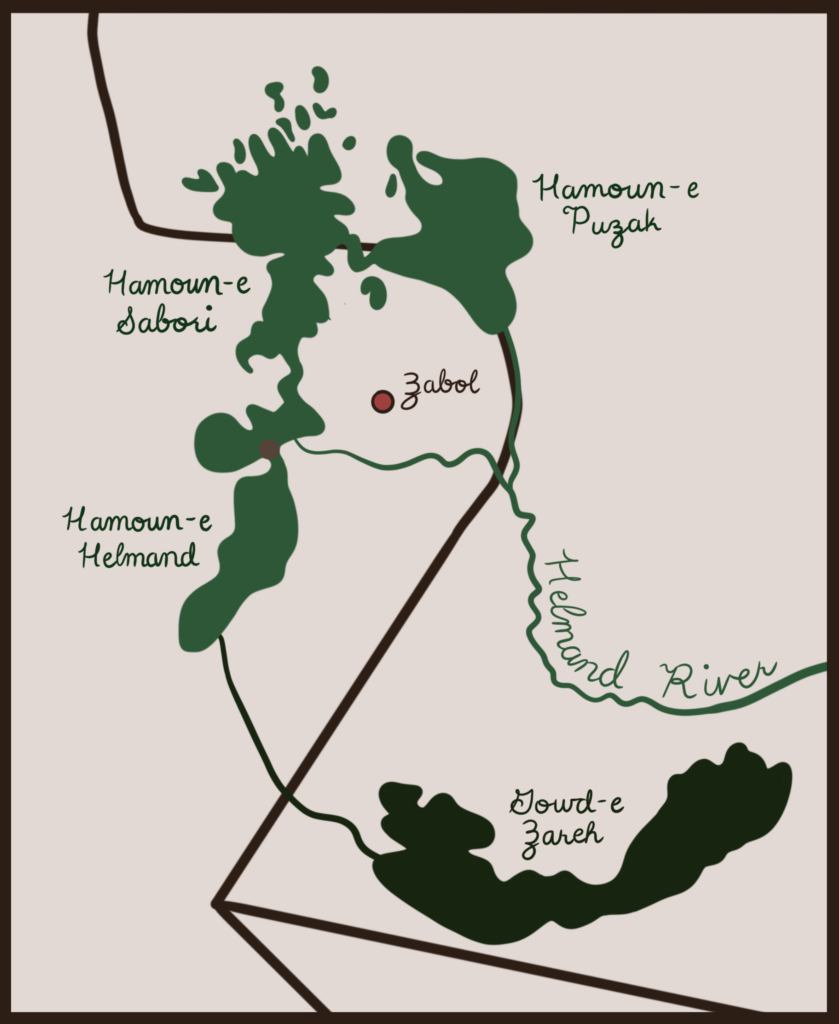
A study by Rashki et al, grouped yearly variations in the Hamouns into four periods:
A low-water period from 1985 to 1988. There was some inflow into the basin at this time, but the lakes shrunk almost every year.
A high-water period from 1989 to 1993. Abundant inflow in the basin kept water levels high for the most part.
A moderate period from 1994 to 1999. During this time a balance between inflow and outflow maintained moderate water levels year-to-year.
A dry period from 2000 to 2005. Where a dramatic decrease in inflow caused a severe drought. A flood in 2005 provided brief reprieve, but the hamouns dried out shortly thereafter.
Made up of a complex of shallow permanent and seasonal freshwater lakes, lagoons and marshes, the Hamouns were an oasis in the dry Sistan basin. Dense reedbeds provided habitat for over 20,000 birds during breeding season and winter time.
Mammals: golden jackals (Canis aureus), red foxes (Vulpes vulpes), caracal (Caracal caracal), striped hyena (Hyaena hyaena), wild boar (Sus scrofa).
Slideshow: 1. Golden jackal (CREDIT: Tisha Mukherjee, 2025); 2. Striped hyena (CREDIT: Rushikesh Deshmukh, 2019); 3. Great egret (CREDIT: Mildeep, 2018); 4. Purple heron (CREDIT: Pierre Dalous, 2012); 5. Great white pelican (CREDIT: Giles Laurent, 2025); 6. Little tern (CREDIT: Tisha Mukherjee, 2024)
Birds:
Waterfowl: great white pelican (Pelecanus onocrotalus), dalmation pelican (Pelacanus crispus), great egret (Egretta alba), grey heron (Ardea cinera), purple heron (Ardea purpurea), Eurasian bittern (Botaurus stellaris), common crane (Grus grus), whooper swan (Cygnus cygnus), greylag goose (Anser anser), common shelduck (Tadorna tadorna), mallard (Anas platyrhynchos), Eurasian coot (Fulica atra), great crested grebe (Podiceps cristatus), western swamphen (Porphyrio porphyrio), pied avocet (Recurvirostra avocetta), black-tailed godwit (Limosa limosa), Little tern (Sterna albifrons), clamorous reed warbler (Acrocephalus stentoreus)
Other: White-tailed eagle (Haliaeetus albicilla), Easter imperial eagle (Aquila heliaca), Cinerous vulture (Aegipius monachus), Western marsh harrier (Circus aeruginosus)
Reptiles: Desert monitor (Varanus griseus)
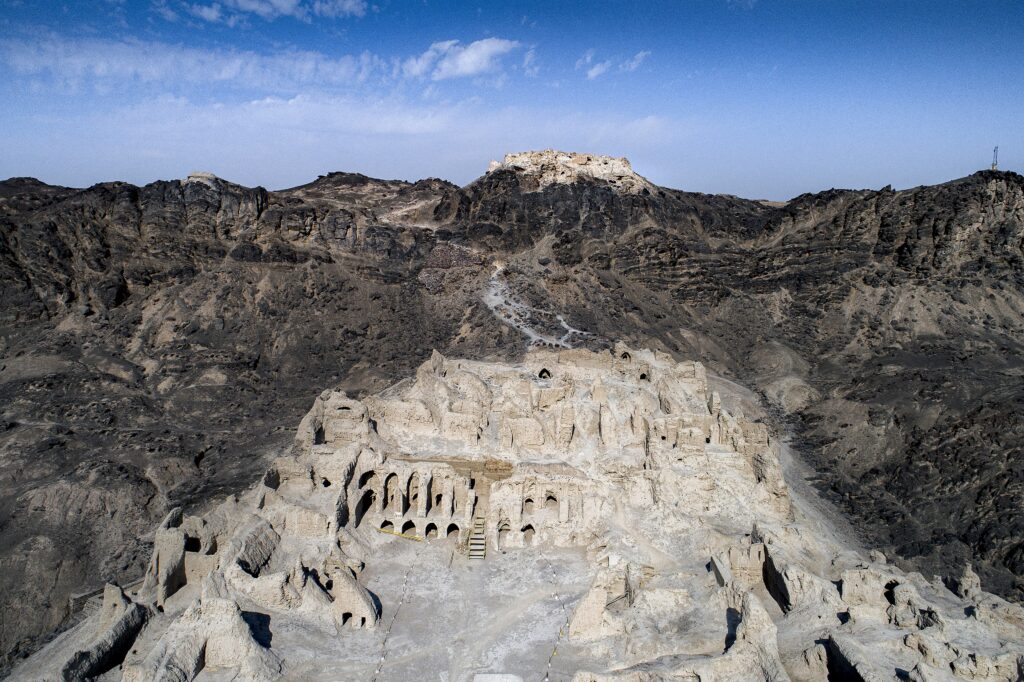
The Hamoun Wetlands and Mount Khajeh are the cradle of millenia of history. The island Mount Khajeh contains some of Iran’s most important archaeological sites. A 2014 study analyzing pottery shards found there were three main settlement periods of Mount Khajeh:
Parthian period: from 247 BCE to 224 CE.
The Sassanid period: from 224 to 651 CE.
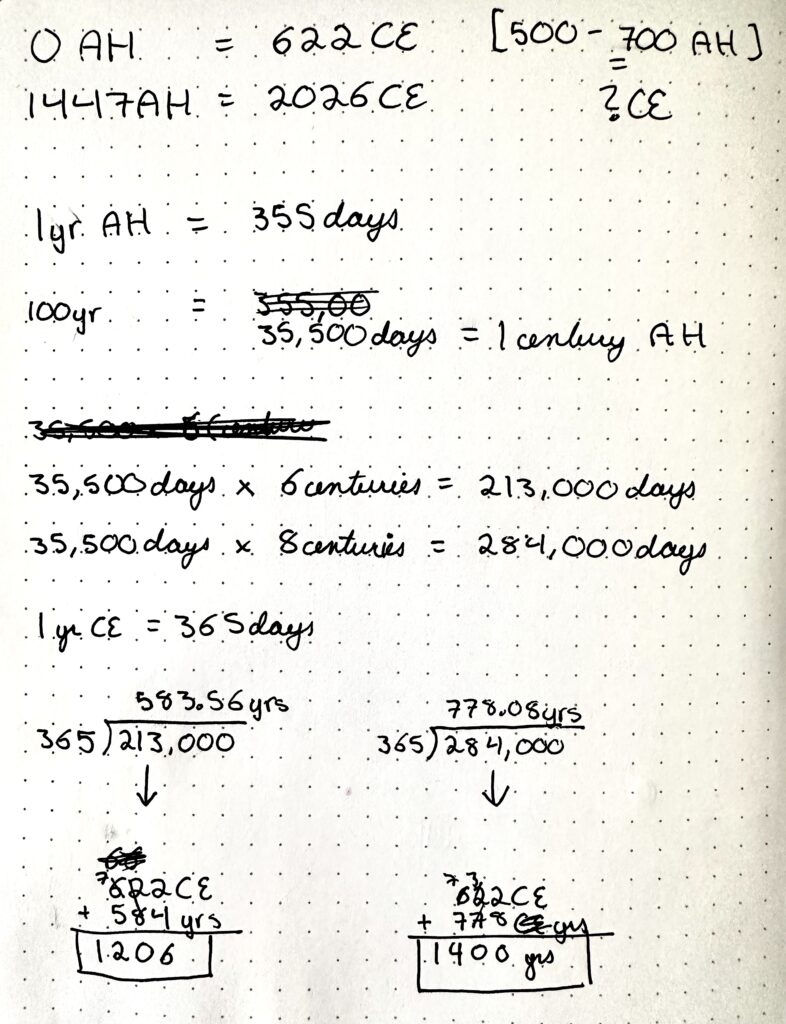
The Islamic period: ~1200 to 1400 CE* (6th-8th century AH**)
*Gregorian date range calculated from provided Hijri date range. Online converters from Hijri to Gregorian only went back a couple centuries. I tried my best with the math based off my research (please feel free to correct)
**AH means After Hijri in the Islamic calender.
FUN FACT: The Ramsar convention was named after the Iranian city Ramsar, where the convention was ratified on February 2, 1971.
Located in the middle of a vast desert, these lakes, wetlands, and reed beds provided for the region’s inhabitants for thousands of years. The Hamouns are so important to people and the planet that they were designated as a wetland of international importance under the Ramsar Convention in 1975.

The Baloch are a nomadic and pastoral ethnic group that live in villages along the shoreline of Hamoun-e-Puzak. The Baloch use reeds from the Hamouns as forage for livestock, to construct boats known as ‘tutans’, as a fuel source for cooking and heating, and to create windbreaks protecting settlements from the intense dust storms churned up by the 120-day wind.
The majority of the region’s inhabitants work in agriculture, fisheries, and handicraft production. Fishing and hunting are important sources of income and sustenance. Their entire way of life depends on the water resources and ecosystem services the Hamoun wetlands provide…
…or at least they did.
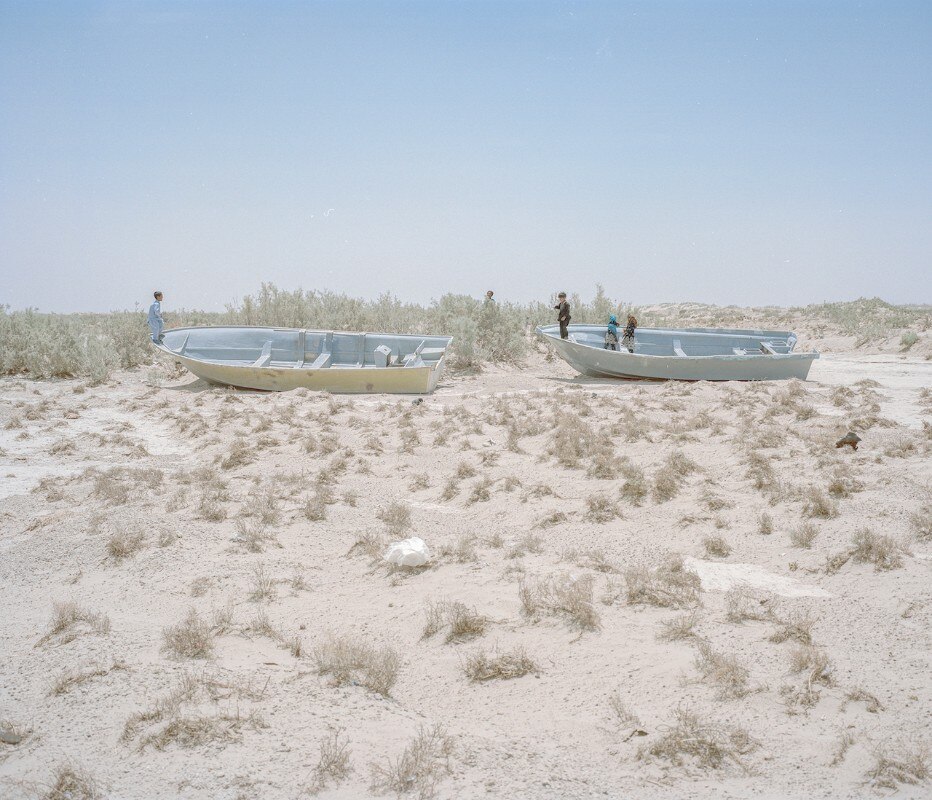
Today, the Hamoun wetlands are completely dry. Water levels naturally fluctuate in the basin, but prolonged drought conditions led to the wetlands drying up in 2001.
Though the Hamouns have partially flooded sporadically since, these events have not been able to counteract the environmental and economic effects of ongoing drought.
So what caused this tragedy?
Several factors have contributed to the crisis of the Hamoun wetlands:
The Sistan Basin has become warmer and drier over time. Records show that the Helmand river delta, which supplies the bulk of the water entering the Hamouns has become more arid since the 1950s. This combined with the region’s innate water scarcity and climate variability worsened drought conditions.
Unsustainable land and water use in the basin is the main cause for the Hamouns shrinking. Damming of tributaries in the upper Helmand Delta (partly due to a significant increase opium poppy production in Afghanistan) has has led to a decrease in water reaching the Hamouns. While climate change is making the region drier, land degredation, unsustainable agriculture, and inefficient irrigation methods further excacerbate drought conditions and the effects of climate change.
Poor management of water resources by the Iranian government further strained the region water supply. Incomplete projects, and lack of planning has caused not only the wetlands but underground aquifers to be depleted.
Hardship is worsened by political disputes between Afghanistan and Iran. Most of the Hamouns’ water sources originate in Afghanistan. While Afghanistan and Iran signed a water-sharing agreement in 1973, inflow into the Iranian portion of the wetlands has steadily decreased over the last few decades.
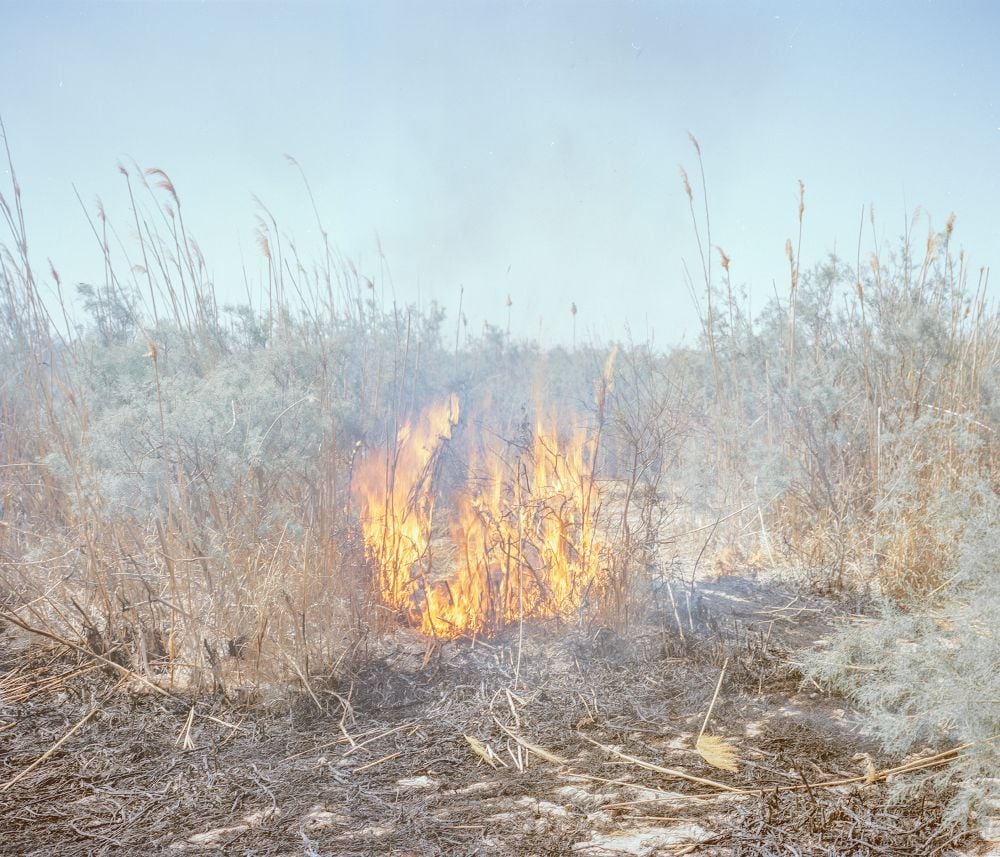
The consequences have been devastating. Drought has destroyed habitat for dozens of species, both migratory and endemic. Dried reedbeds no longer provide habitat to waterfowl, but serve as kindling that can start massive wildfires.
What was once the largest expanse of freshwater in the Iranian plateau has become a major source of dust storms in south and west Asia, impacting the local ecosystem, public health, and climate patterns.
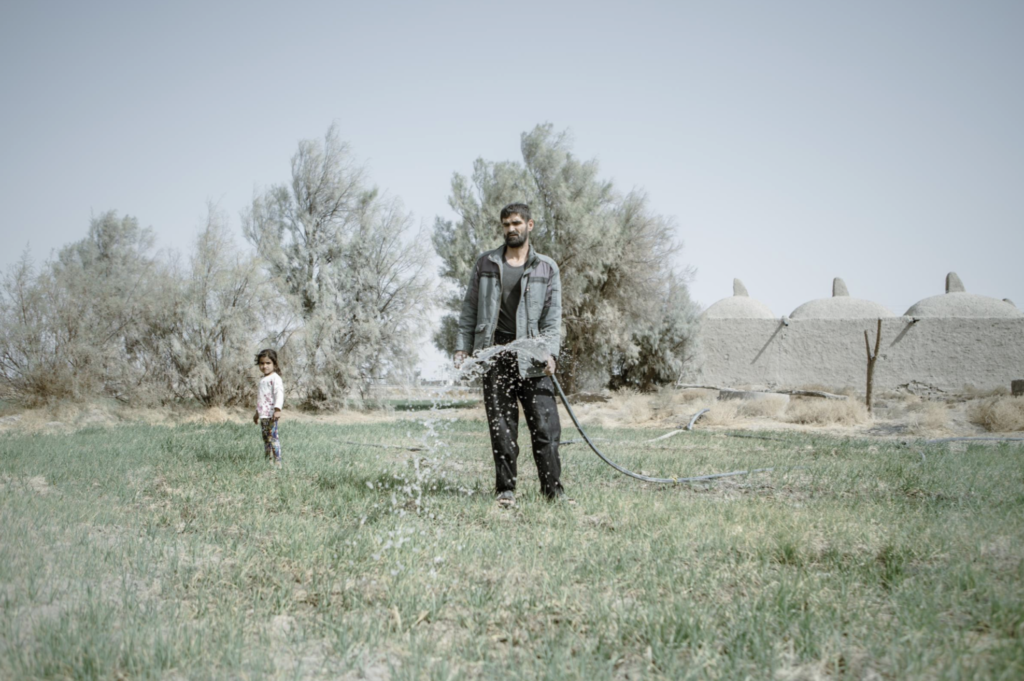
When the water resources vanished, so did the livelihoods of Sistan’s inhabitants. The region’s economy relied heavily on fishing, agriculture, and animal husbandry — without water locals cannot sustain themselves. As of 2018, 95 per cent of Sistan-Baluchistan’s inhabitant live beneath the poverty line.
"Sistan is now regarded as the land of forgotten and exhausted people; it’s the land of people whose voices have not been heard, so much so that they have become silent and, with little hope, they are trying to keep their villages and cities alive,”
Hashem Shakeri, An Elegy for the Death of Hamun
To see and learn more about the crisis affecting the Hamoun wetlands, and possible long-term solutions, watch the video below.
Special Thanks
I’d like to give special thanks to Iranian photographers Solmaz Daryani and Hashem Shakeri, who granted the use of their photography in this project. Their work capturing the crisis in Sistan-Baluchistan enabled me to better understand and tell this story.
Both Daryani and Shakeri’s work (linked below) brings light to the issues facing the Hamoun wetlands and surrounding communities, and I highly recommend checking out their projects in full to learn more about the Hamoun Wetlands and Sistan-Baluchistan.
The content I make relies heavily on the collaboration and contributions of many, including researchers, journalists, musicians, and photographers. Without them, this wouldn’t be possible. Thank you!
Solmaz Daryani
Hashem Shakeri
Citations
Whitford, W.; Duval, B. (2020). “Chapter 4 — Wind and Water Processes.” Ecology of Desert Systems (Second Edition), pages 73-107. Accessed via https://www.sciencedirect.com/science/chapter/monograph/abs/pii/B9780128150559000047
Whitford, W.; Duval, B. (2020). “Chapter 8 — consumers and Their Effects.” Ecology of Desert Systems (Second Edition), pages 203-263. Accessed via https://www.sciencedirect.com/science/chapter/monograph/abs/pii/B9780128150559000084
MacMahon, J. (2001). “Desert Ecosystems.” Encyclopedia of Biodiversity, Volume 2. Accessed via https://www.sciencedirect.com/science/chapter/referencework/abs/pii/B0122268652000675?via%3Dihub
“Lake Eyre Conditions & Water Levels.” (2026). Wrightsair. Accessed via https://www.wrightsair.com.au/lake-eyre-conditions/
“Animals in Lake Eyre — Australia’s Desert Lake.” (N.D.). Lake Eyre Tours. Accessed via https://www.lakeeyretours.com.au/animals#wildlife-guide
“Lake Eyre.” (2026). Encyclopedia Britannica. Accessed via https://www.britannica.com/place/Lake-Eyre
“Lake Eyre Australia Facts: Everything About Kati Thanda-Lake Eyre.” (2026). Lake Eyre Tours Accessed via https://www.lakeeyretours.com.au/blog/lake-eyre-facts
“About the Lake Eyre Basin.” (2024). Australian Government — Department of Climate Change, Energy, the Environment and Water. Accessed via https://www.dcceew.gov.au/water/policy/national/lake-eyre-basin/about
“Lake Eyre Blushes.” (2026). NASA Earth Observatory. Accessed via https://science.nasa.gov/earth/earth-observatory/lake-eyre-blushes/
Stellrecht, E. (2024). “Lake Eyre.” EBSCO. Accessed via https://www.ebsco.com/research-starters/biology/lake-eyre
“The Dieri People of the Lake Eyre Basin.” (N.D.) Government of South Australia. Accessed via https://cdn.environment.sa.gov.au/landscape/docs/saal/killalpaninna_panel_prehistory6_final.pdf
“Water Pours Into Australia’s Lake Eyre.” (2025). NASA Earth Observatory. accessed via https://science.nasa.gov/earth/earth-observatory/water-pours-into-australias-lake-eyre-154451/
Saunders, T. (2025). “Kati Thanda-Lake Eyre set for the most substantial water fill in at least 15 years.” ABC News. Accessed via https://www.abc.net.au/news/2025-04-12/floodwaters-kati-thanda-lake-eyre-water-fill-largest-lake/105157580
Scourfield, S. (2026). “Lake Eyre set to reach capacity.” The West Australian. Accessed via https://thewest.com.au/travel/lake-eyre-set-to-reach-capacity-c-21881737
“Federal Court awards native title over Lake Eyre.” (2012). ABC News. Accessed via https://www.abc.net.au/news/2012-05-22/native-title-arbana-hearing/4025738
Mauder, S.; Keane, D.; Carbone, I. (2025). “At Kati Thanda-Lake Eyre, and ‘inland tsunami’ is making a sea.” ABC News. Accessed via https://www.abc.net.au/news/2025-05-31/kati-thanda-lake-eyre-is-about-to-fill-after-floods/105324080
Yeomans, C. (2026). “Growing expectations Lake Eyre could reach full capacity for first time in decades.” ABC News. Accessed via https://newsapp.abc.net.au/news/2026-03-01/could-lake-eyre-finally-reach-capacity-after-decades/106395774
“Rare Filling of Kati Thanda-Lake Eyre.” (2019). NASA Earth Observatory. Accessed via https://science.nasa.gov/earth/earth-observatory/rare-filling-of-kati-thanda-lake-eyre-145076/
“Lake Eyre (Kati Thanda), Australia.” (N.D.). Salt Works Consultants. Accessed via https://saltworkconsultants.com/lake-eyre/
Plumb, J. (2024). “Queensland bans oil and gas development in the Lake Eyre Basin.” HopgoodGanim Lawyers. Accessed via https://www.hopgoodganim.com.au/news-insights/queensland-bans-oil-and-gas-development-in-the-lake-eyre-basin/
“Thar Desert.” (2026). Encyclopedia Britannica. Accessed via https://www.britannica.com/place/Thar-Desert
Damon, B. (2026). “Thar Desert.” Deserts of the World. Accessed via https://desertsoftheworld.com/thar-desert/
“IN006RIX — Lake Sambhar.” (N.D.). Ramsar Sites Information Service. Accessed via https://rsis.ramsar.org/RISapp/files/RISrep/IN464RIS.pdf
“Sambhar Salt Lake.” (2023). Encyclopedia Britannica. Accessed via https://www.britannica.com/place/Sambhar-Salt-Lake
Chauhan, M. & Gopal, B. (2018). “Saline Wetlands of the Arid Zone of Western India.” In: Finlayson, C., Milton, G., Prentice, R., Davidson, N. (eds) The Wetland Book. Springer, Dordrecht. Accessed via https://link.springer.com/rwe/10.1007/978-94-007-4001-3_173#citeas
Yadav, P.; Sharma, A.; Chandra, S. (2025). “The Ramsar Site of Rajasthan (Sambhar): Diversity and Ecosystem of Wetland.” International Journal of Research and Analytical Reviews (IJRAR). Accessed via https://ijrar.org/papers/IJRAR25A1312.pdf
Tripathi, G. (2026). “Sambhar Lake: India’s Largest Inland Salt Lake — UPSC Complete Guide.” Anantam IAS. Accessed via https://anantamias.com/sambhar-lake/
“Sambhar Lake Jaipur: Salty Splendor | Incredible India.” (N.D.). Incredible India. Accessed via https://www.incredibleindia.gov.in/en/rajasthan/jaipur/sambhar-lake
“Sambhar — Opening up the window of a unique landscape.” (N.D.). Department of Tourism, Government of Rajasthan. Accessed via https://www.tourism.rajasthan.gov.in/content/dam/rajasthan-tourism/english/pdf/lakes-rivers/Sambhar_Lake_Broucher_2019.pdf
Bohra, D.L. (2020). “Indicators of changing ecosystems: aquatic bird mass mortality in Sambhar Salt Lake, Rajasthan, India.” Current Science. Accessed via https://www.jstor.org/stable/27138872?read-now=1&seq=1#page_scan_tab_contents
Sutton, D. (2026). “Between Salt and Water: The Environmental Crisis at Sambhar Lake, Rajasthan, India.” Arcadia. Accessed via https://www.environmentandsociety.org/arcadia/between-salt-and-water-environmental-crisis-sambhar-lake-rajasthan-india
“Information Sheet on Ramsar Wetlands.” (1997). RAMSAR. Accessed via https://rsis.ramsar.org/RISapp/files/RISrep/IR44RIS.pdf
“Hamoun.” (N.D.). UNESCO. Accessed via https://www.unesco.org/en/mab/hamoun
Maleki, S.; Koupei, S.; Soffianian, A.; Saatchi, S.; Pourmanafi, S.; Rahdari, V. (2019). “Human and Climate Effects on the Hamoun Wetlands.” American Meteorological Society. Accessed via https://journals.ametsoc.org/view/journals/wcas/11/3/wcas-d-18-0070_1.xml
Rashki, A.; Kaskaoutis, D.G.; Goudie, A.S.; Kahn, R.A. (2013). “Dryness of ephemeral lakes and consequences for dust activity: The case of the Hamoun drainage basin, southeastern Iran.” Science of the Total Environment.Accessed via https://www.sciencedirect.com/science/article/abs/pii/S0048969713006979?via%3Dihub
“The Hamoun Wetlands.” (N.D.). USGS Earth Resources Observation and Science Center. Accessed via https://eros.usgs.gov/earthshots/the-hamoun-wetlands
Ghanimati, Soroor. (2015). “”KUH-E ḴᵛĀJA.” Encyclopaedia Iranica. Accessed via https://www.iranicaonline.org/articles/kuh-e-khvaja/#citation
Benijamali, S.; Moghadam, J.; MousaviHaji, S.; Afarin, R. (2014). “A Review on Chronology of Palace of Kuh-e Khajek (Qaleh Kaferun) Relying on the Surface Potsherd.” Internati Journal of Humanities. Accessed via https://www.academia.edu/33961816/A_Review_on_Chronology_of_Palace_of_Kuh_e_Khajeh_Qaleh_Kaferun_Relying_on_the_Surface_Potsherd
MehrAfarin, R.; Jamali, S. (2011). “Archaeological Survey of Kooh-e Khajeh in Sistan.” The International Journal of Humanities. Accessed via https://eijh.modares.ac.ir/article_17477.html
Koch, D. (2016). “The Star of Bethlehem.” (p. 238-241). Gilgamesh. Accessed via https://www.gilgamesh.ch/Koch_StoB_english_web.pdf
Herzfeld, E. “(1941). “Iran In The Ancient East.” (p. 292). London Oxford University Press. Accessed via https://archive.org/details/in.ernet.dli.2015.77483/page/n309/mode/2up?q=magi
“A Dry Lake Hamun Means More Dust Storms.” (2023). NASA Earth Observatory. Accessed via https://science.nasa.gov/earth/earth-observatory/a-dry-lake-hamun-means-more-dust-storms-150941/
“From Wetland to Wasteland: The Destruction of the Hamoun Oasis.” (2003). NASA Earth Observatory. Accessed via https://science.nasa.gov/earth/earth-observatory/from-wetland-to-wasteland-the-destruction-of-the-hamoun-oasis/
Wright, S. (N.D.). “An Elegy for the Death of Hamun.” Lens Culture. Accessed via https://www.lensculture.com/articles/hashem-shakeri-an-elegy-for-the-death-of-hamun
Bahrami, K. (2007). “Kuh-e Khwajeh (Mount Kajeh/Ushida).” The Circles of Ancient Iranian Studies. Accessed via https://cais-soas.com/CAIS/Archaeology/Ashkanian/khuh_e_khwajeh.htm
Yao, F.; Livneh, B.; Rajagopalan, B.; Wang, J.; Crétaux,, J.F.; Wada, Y.; Berge-Nguyen, M. (2023). “Satellites reveal widespread decline in global lake water storage.” Science. Accessed via https://www.science.org/doi/10.1126/science.abo2812
Read More
Backyard Friends: The Virginia Opossum
The Backyard Friends is a series looking at animal pals that you might find in your backyard. This segment is about the only marsupial in the U.S. and Canada — the Virginia Opossum!
Ephemeral Lakes: Fascinating Fleeting Oases
A lake is a large body of water surrounded by land and not connected to a sea or ocean… but
Kati-Thanda Lake Eyre: The Largest Lake that’s Rarely There
Kati Thanda-Lake Eyre is the largest lake in Australia when it’s full… which has only happened a few times in