The Backyard Friends is an ongoing YouTube and blog series about animal pals that you might find in your backyard. No matter where we are, we are a part of the nature, not apart from it.
Fast Facts:
Scientific Name: Branta canadensis
Common names: Canada goose (NOT Canadian goose), honkers.
Conservation Status: Least Concern (population increasing globally)
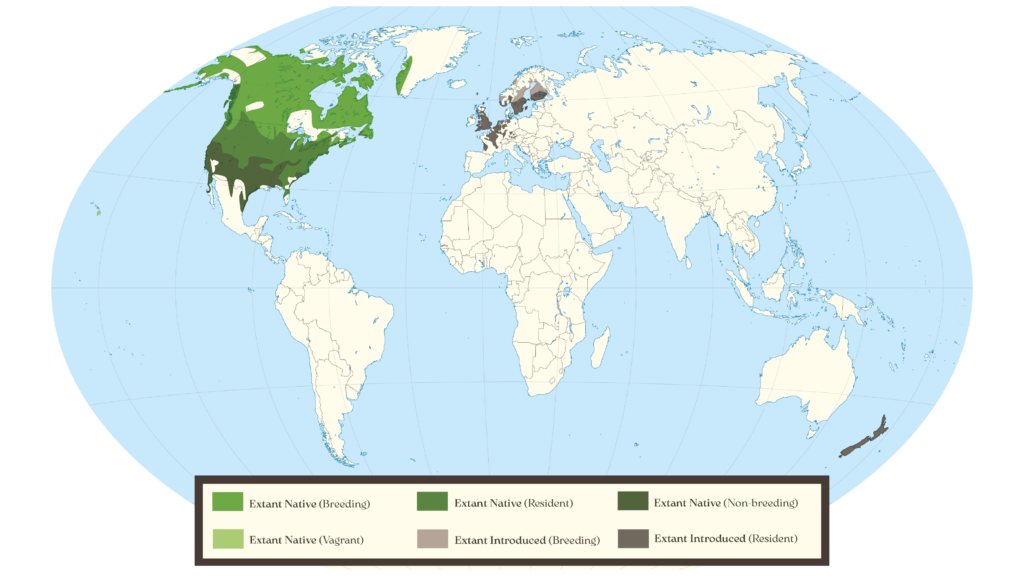
Range: Native to North America, introduced to Western and Northern Europe, New Zealand
Description:
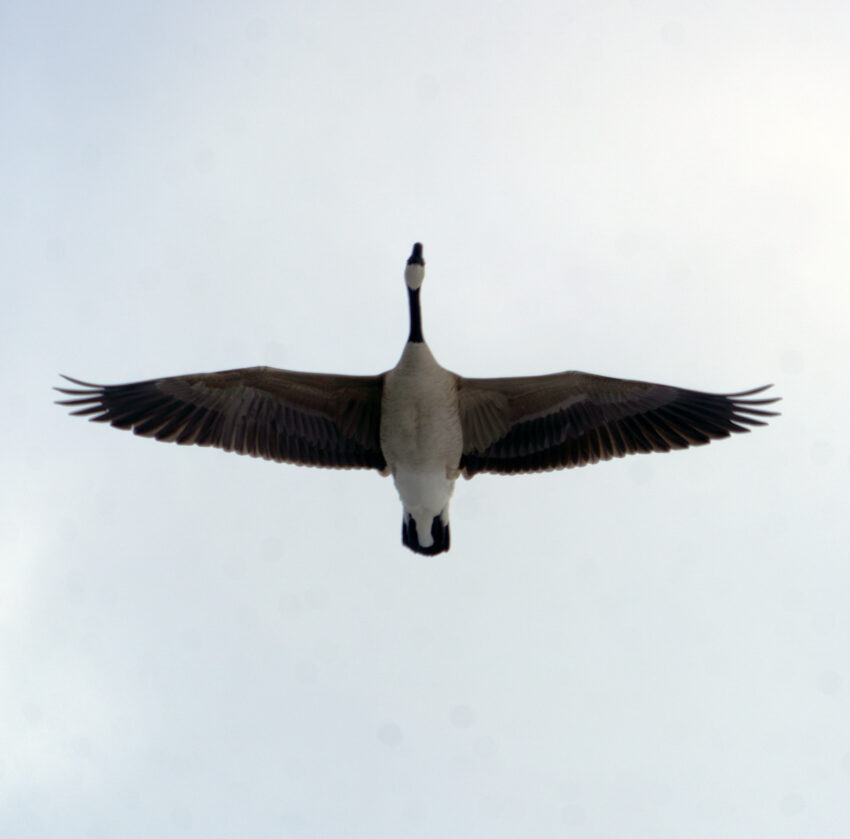
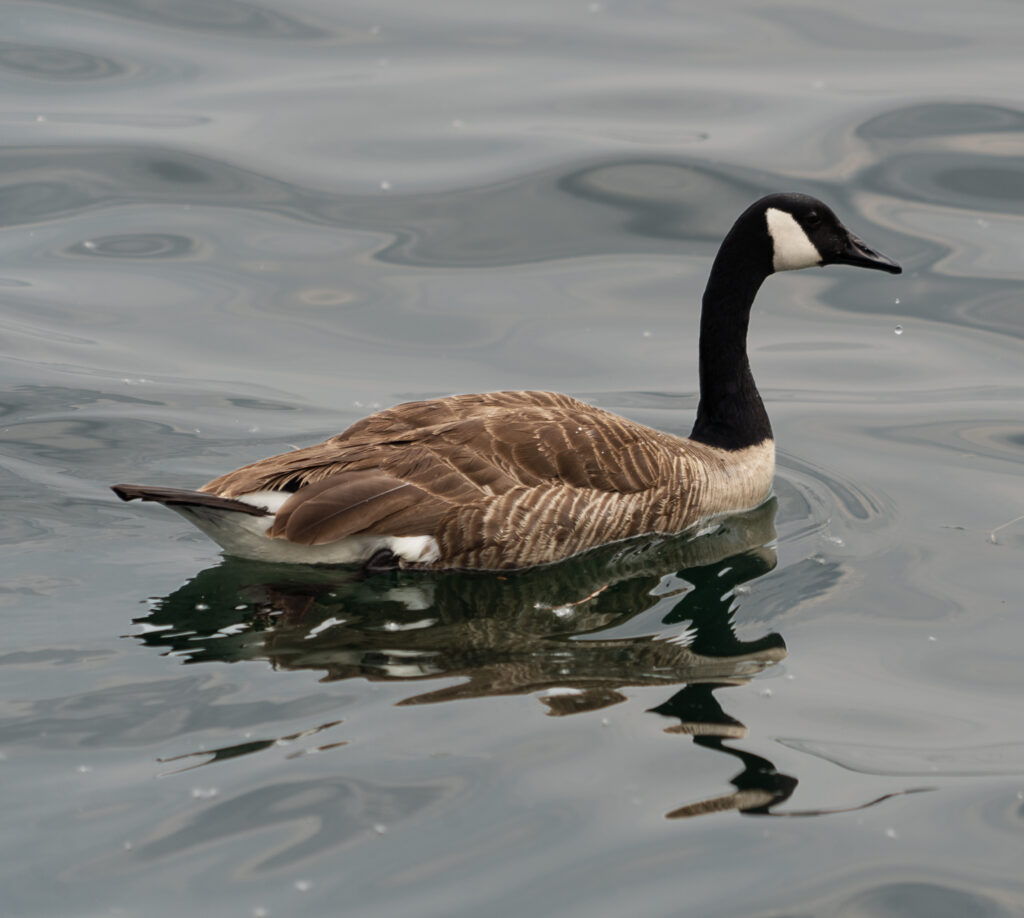
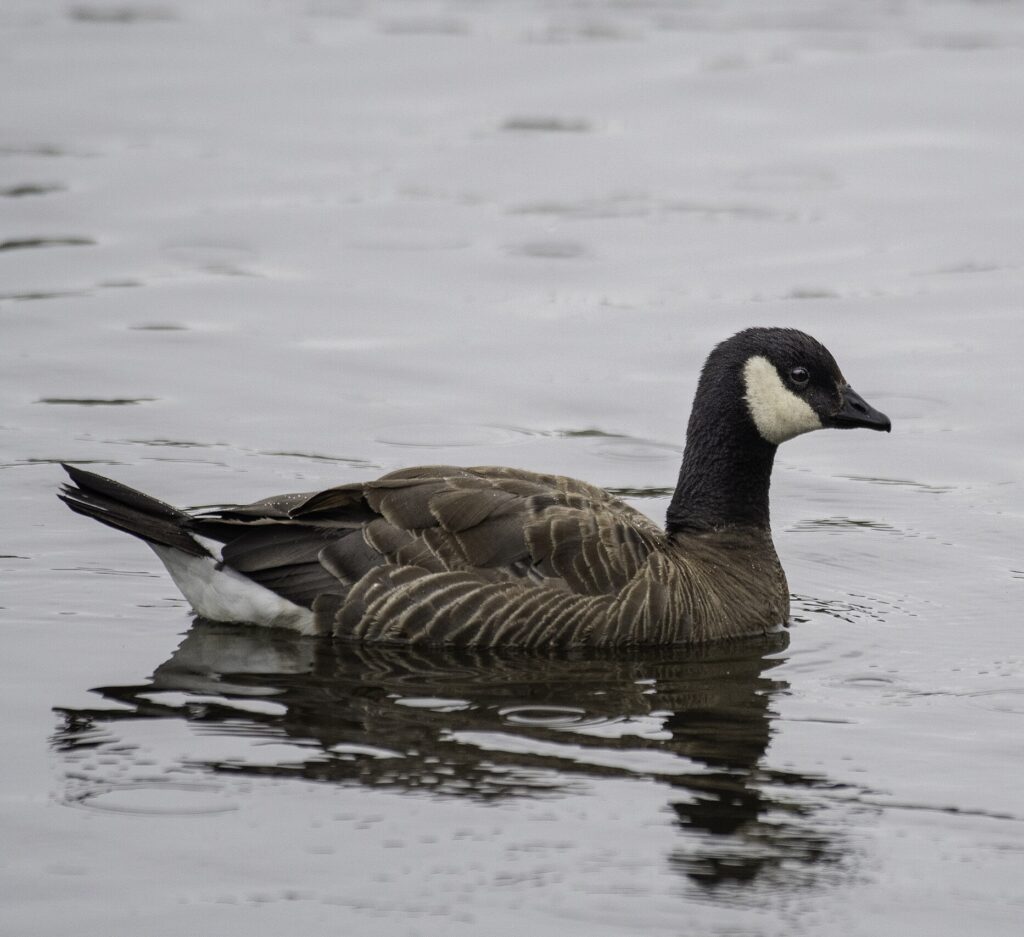
Canada geese are easily identified by their buff or brown coloured body, black neck and white chinstrap marking. They weigh up to nine kilograms (20 pounds), with an average wingspan between 127 and 170 centimetres (50-66 inches). Generally getting bigger as you travel south, and darker further westward.
The only species that could be mistaken for Canada Geese are Cackling Geese – which were considered four subspecies of Canada Geese until 2004 when they were recognized as their own species. They are smaller and have shorter necks, and often flock alongside Canada geese, adding to confusion.
Range:
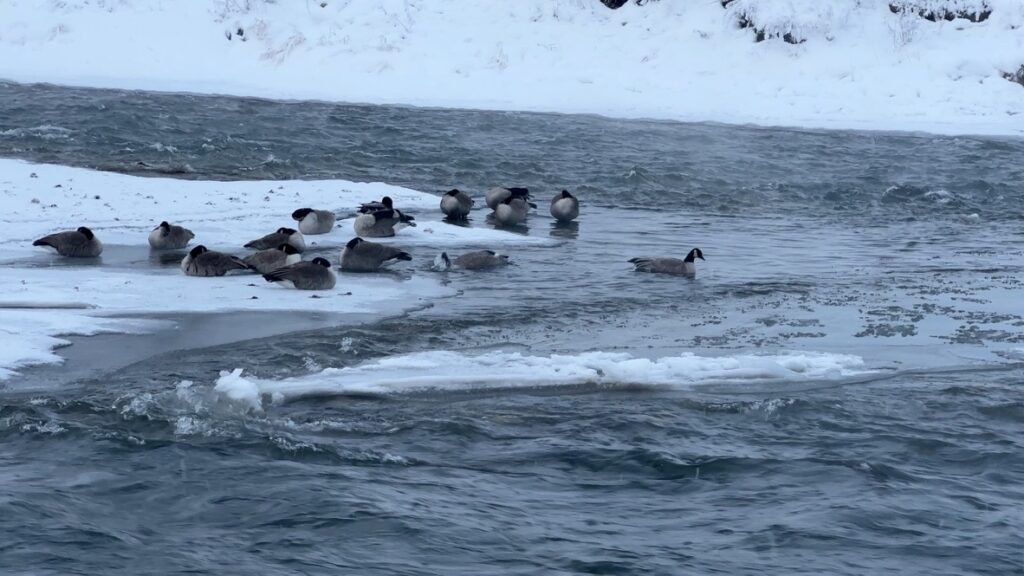
Native to North America, Canada geese breed across much of Canada and the northern United States. In winter they usually migrate to the southern United States and Mexico. However, some populations winter in northern areas with access to open water and food resources, even in extreme cold.
My hometown Calgary is one such city. Here Canada geese reside year-round, toughing it out along the shores of the Bow and Elbow rivers even as temperatures push -40.
Canada geese have also been introduced to Europe and New Zealand. Specimens were first brought to Europe in the 17th century for royal collections – namely those of King Charles the Second of England and King Louis the Thirteenth of France. Populations were later released in Europe and New Zealand to be hunted for sport.
Habitat:
These adaptable creatures can be found in a variety of habitats, including tundra, wetlands, grasslands, agricultural and urban areas – though almost always near water. They thrive so much in our cities, parks, golf courses and parking lots they are often considered pests, and can be found in some pretty funny places.
Once I saw a pair of geese attentively raising their brood outside of West Edmonton Mall. The couple were nesting in a little service area beside one of the entrances.
Diet:
Diet: Omnivorous
On land they frequently forage for food in groups, but they also dabble in water for plants and small animals. Some subspecies of Canada goose (such as B. canadensis maxima) have adapted to urban life, grazing on domestic grasses (lawn) year-round.
- Spring/Summer diet: primarily grasses and sedges – including skunk cabbage and eelgrass. In the water they dabble for aquatic plants and small crustaceans, mollusks or fish.
- Fall/Winter diet: berries, seeds, and grains – including crops like corn and wheat.
Predators:
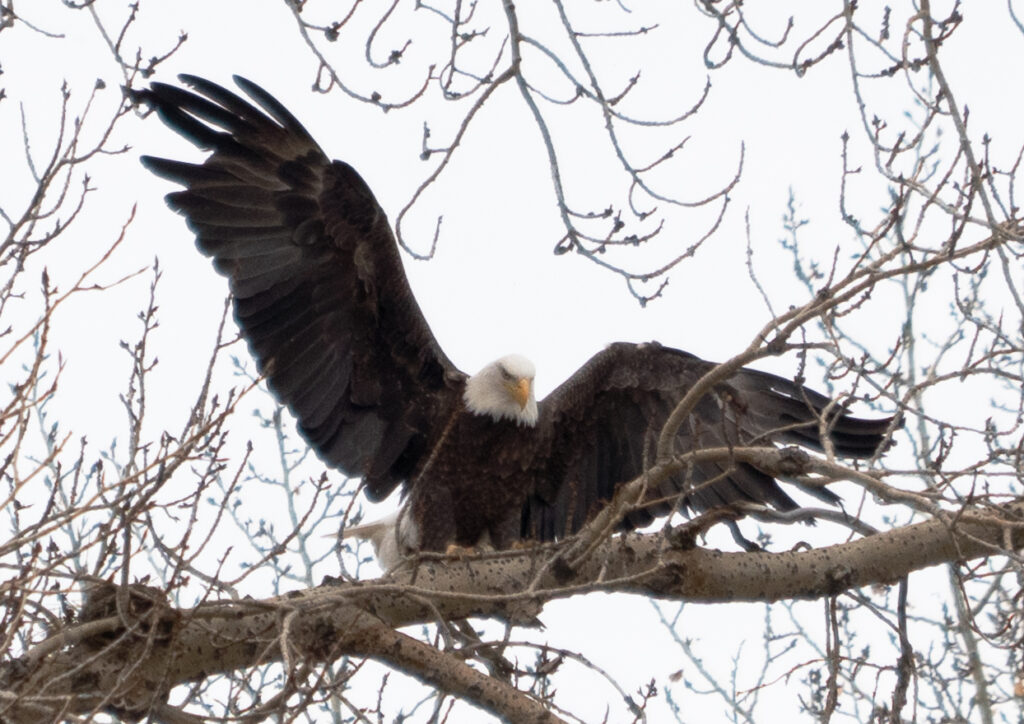
Canada geese and their eggs are predated by wolves, coyotes, foxes, bears, wolverines, eagles and ravens.
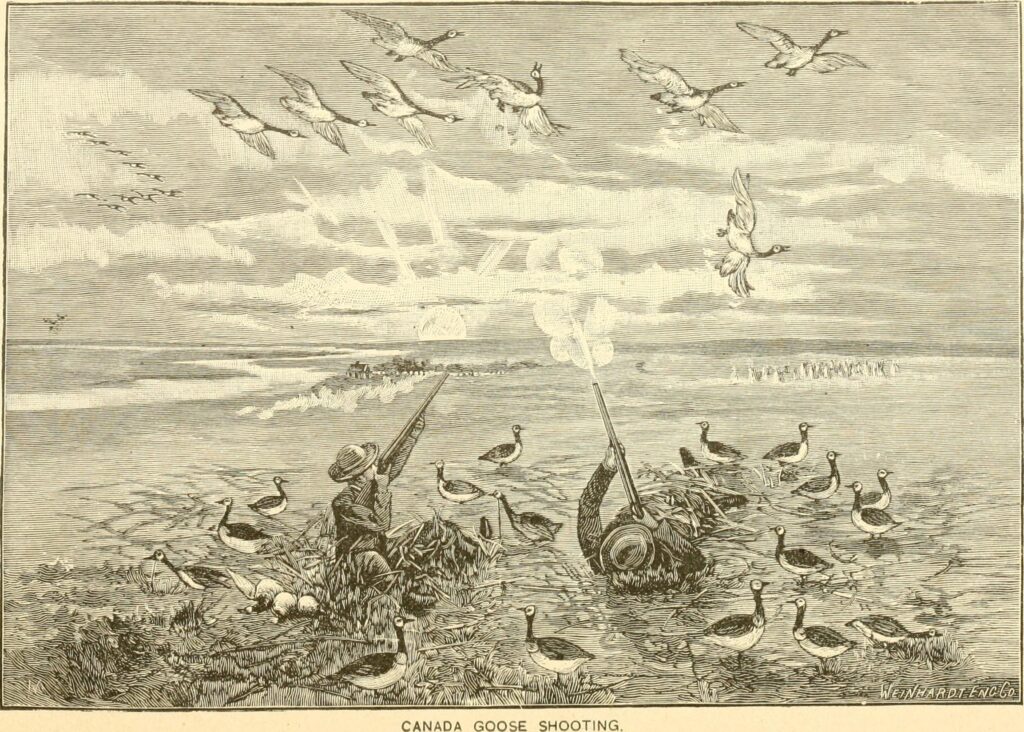
Humans also hunt Canada geese, harvesting roughly two-point-six million geese annually in North America. They are also hunted in Sweden, Denmark, Norway, and Germany.
Aggression:
Within their range, Canada Geese have a bad reputation, and are known for being aggressive… but their infamy isn’t entirely warranted, and their wrath is often avoidable.
Like many other animals, these geese do get more aggressive and territorial during mating season and when nesting.
Watching for warning behaviours like hissing, honking, vibrating head feathers and pumping their head with their bill open and tongue raised, can prevent unpleasant encounters. In my experience, you can usually just give geese and goslings a bit of space as you pass.
However, managing aggression isn’t always as simple as “give them space.” Geese can be quite the menace if nesting near someone’s residence. Every now and again there’s a news story about nesting Canada Geese absolutely terrorizing people who happened to live near a pair.
Reproduction:
Mating system: Monogamous, Assortative.
Generally Canada geese choose partners who are similar in size to them, a system known as assortative mating. Males tend to be the larger of the two. In the wild they construct their nests on the ground near water, but they’ve also learned to utilize rooftops, balconies, and parking lots for nesting.
These birds are in it for the long haul. They mate for life and have very low “divorce rates”. Pairs will stay with each other year-round and both males and females care for offspring, which is rare in geese and ducks.
“Divorce was rare in my geese; usually a change in mates meant the death of the former partner.”
Michael R. Conover, 2009, p. 278
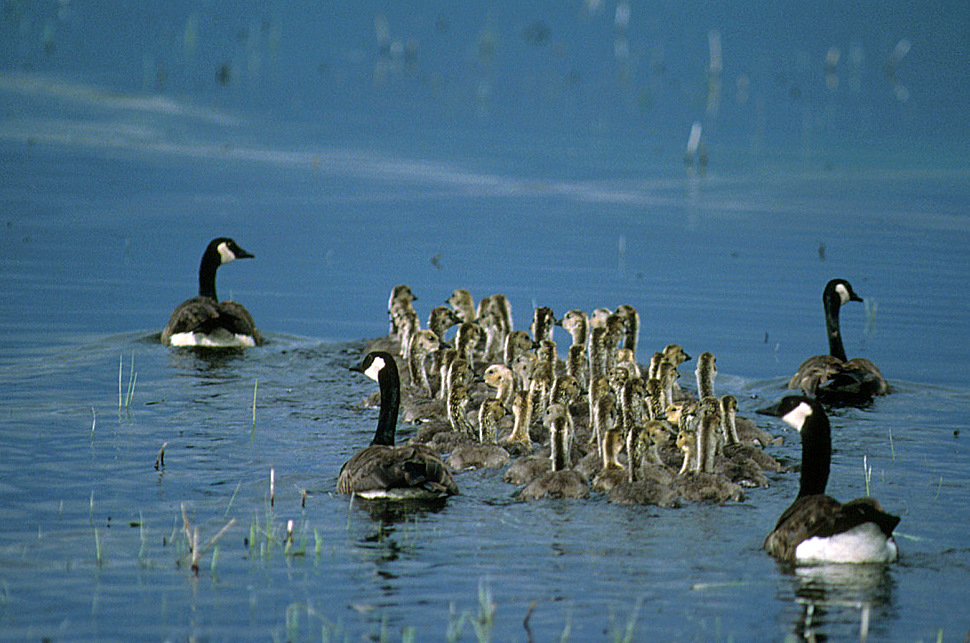
Canada Geese have one brood a year with between 2-8 eggs. Goslings have yellow plumage, and are precocial, or relatively independent at birth. They are able to leave the nest within 1-2 days after hatching, and are able to swim, feed and dive shortly thereafter.
These geese are known to form “gang broods”. These occur when multiple broods are combined together, the largest of these exceeding one-hundred goslings.
Sometimes this occurs before hatching, called a pre-hatch brood, where a goose lays eggs in the nest of another, and her children are raised by the other parent. Post-hatch broods occur after hatching, when a parent loses or abandons its children, or multiple couples merge broods to care for them cooperatively.
Some of the possible benefits of gang broods include greater predator protection through the dilution effect – more goslings means any one gosling is less likely to be picked out by predators. It may also provide better access to foraging, since larger goose families are dominant over smaller ones.
But not all Canada geese form gang broods, suggesting they may not be innately better than raising goslings individually. The main theorized drawback of gang broods is intra-brood competition, since being in a brood with 99 other goslings means having to share grazing areas, food access, and parental care with 99 other goslings.
Conservation:
While so abundant and widespread now that they are often seen as a nuisance, Canada Geese were once on the brink of extinction. In the early 20th century, habitat loss and hunting had decimated Canada Goose populations, and they were nearly driven into extinction. However, thanks to better regulations and conservation efforts including the Migratory Birds Convention Act.
Nowadays, the Canada Goose is considered Least Concern by the IUCN, with both their range and populations increasing since the 1940s. While roughly two-point-six million Canada Geese are hunted annually in North America, this doesn’t seem to be impacting populations.
Potential threats listed on the IUCN include shifting habitat due to climate change and extreme weather. Ranges for the Canada Goose have shifted northward, though this does not appear to currently impact population trends.
Citations
- “Branta canadensis (Canada Goose)” (2018). IUCN RedList.
- “Canada Goose.” (N.D.) All About Birds.
- Attenborough, D. (1998). “The life of birds.” BBC London. p. 299.
- Yarza, F. (2014). “Branta canadensis.” Animal Diversity Web.
- Richard-Craven, M. (2022) “10 Fun Facts About the Canada Goose.” The National Audubon Society.
- Rush, C., & Coluccy, J. (2021). “Understanding Waterfowl: Super Broods.” Ducks Unlimited.
- “Canada goose.” (2025). Encyclopedia Britannica.
- Conover, M. (2009). “Gang Brooding in Canada Geese: Role of Parental Condition and Experience.” The Condor/The Cooper Ornithological Society.
Read More:

Is the Bat Trade Sustainable?
It’s easy to find bat and other exotic animal specimens, especially with the rise of social media and online marketplaces.

Red List Friends: The Painted Woolly Bat
The Red List Friends is a series showcasing some of the world’s at-risk species from the IUCN’s Red List of

10 Major Threats to Bats Worldwide
Bats play important roles in our ecosystems and economies, but they also face a variety of threats — many of