White-nose syndrome is disease devastating hibernating bat colonies in North America. It’s arrival was mysterious, but it is now one of the biggest threats to bat species on the continent.
Biologists with the New York State Department of Environmental Conservation are conducting their annual winter surveys of hibernating bats in caves and mines. What they discover during these routine surveys is anything but.
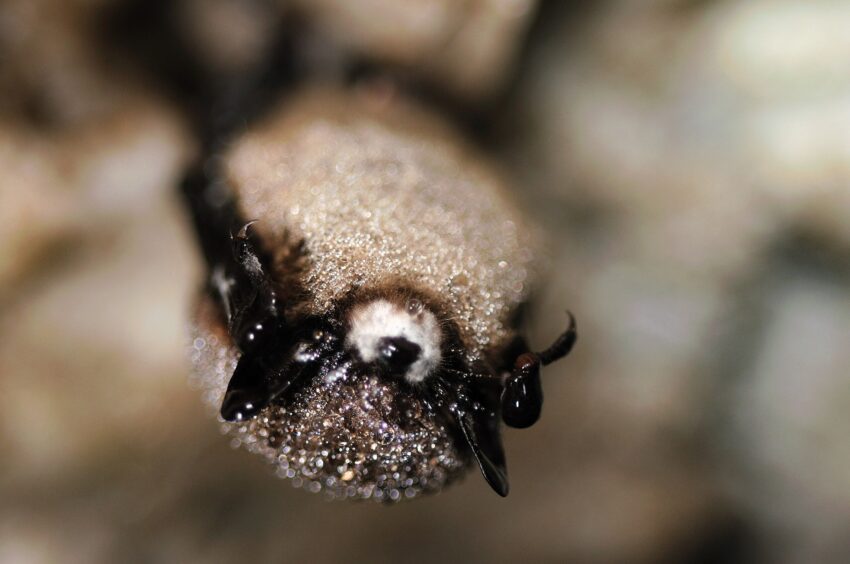
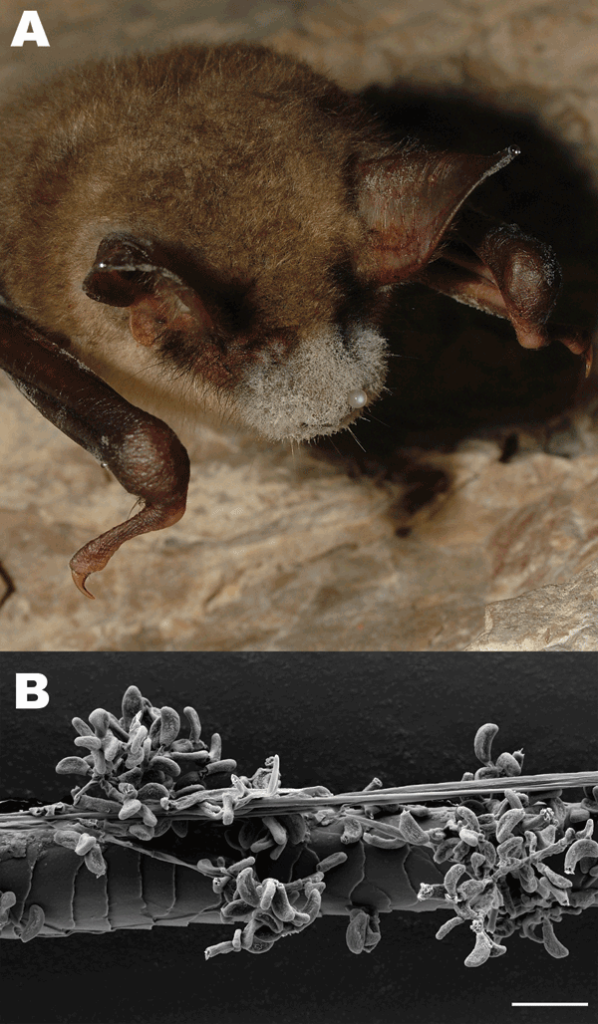
Bats are seen flying out into snowy winter landscapes when they should be hibernating. Inside the cave is even more grim. Instead of cozy colonies cuddling on the ceiling, biologists find heaps of dead bats piling up on the floor of the cave. On the few remaining bats, a white, fuzzy growth is seen on their muzzles, wings and ears.
That was in 2007. At the time, the cause of this catastrophe was a mystery to biologists, but it would mark the beginning of one of the most devastating wildlife epidemics in recorded history.
What is White-Nose Syndrome?
White-Nose Syndrome (WNS) caused by the fungus Pseudogymnoascus destructans and infects hibernating bats. The disease is named after and identified by fuzzy white growths on the nose, ears, wings and of bats. It also causes bats to wake often and prematurely during hibernation, which leads to starvation.
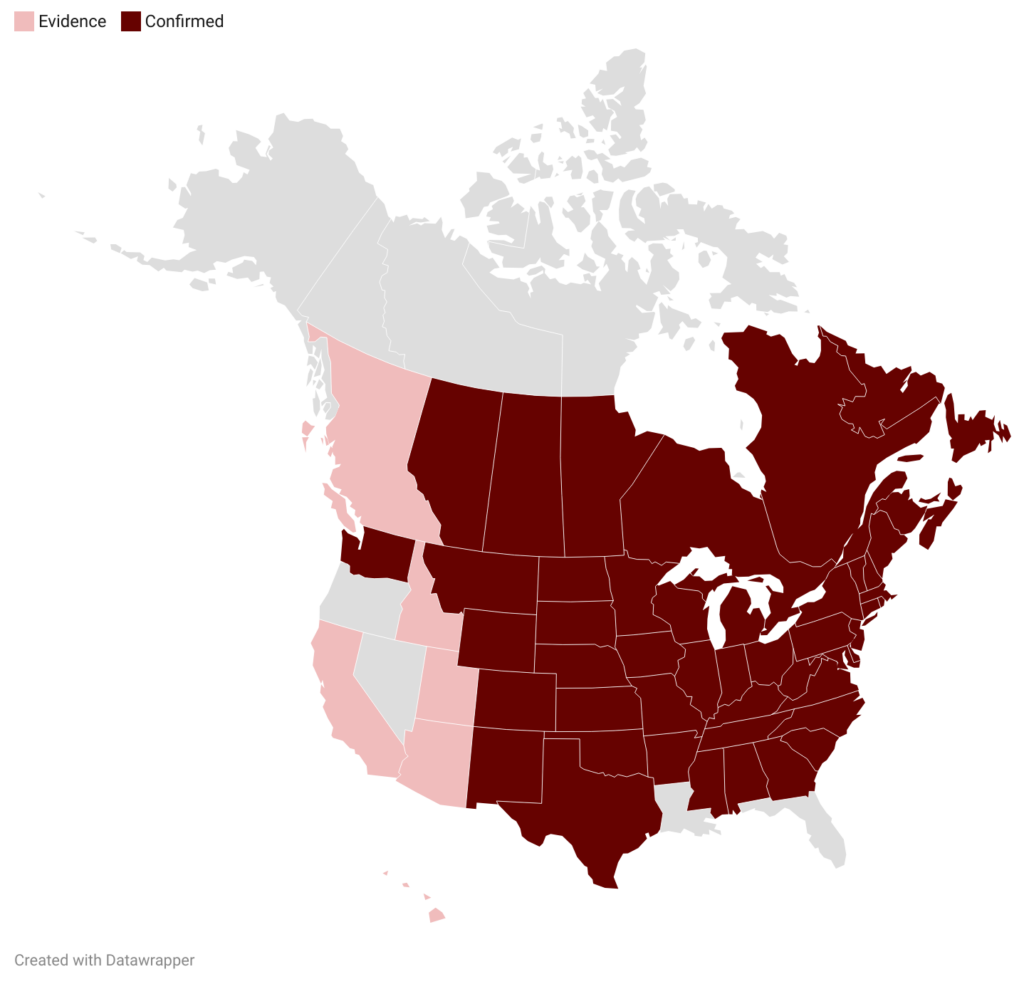
The fungus is native to Europe where it’s commonly found on bats, but rarely causes mortality. In North America, the disease is invasive and decimating bat populations across the continent. Since its introduction, WNS has become one of the biggest conservation threats to North American bat populations.
Watch my latest video on WNS to learn more about it’s introduction, effects and possible treatments.
Citations:
- Frick, W.; Kingston, T.; Flanders, J. (2019). “A review of the major threats and challenges to global bat conservation.” Annals of the New York Academy of Sciences. Accessed via https://www.batcon.org/wp-content/uploads/Fricketal2019NYAS.pdf
- Frick, W.; Puechmaille, S.; Willis, C. (2016). “Chapter 9 – White-Nose Syndrome in Bats.” Springer Link. Accessed via https://link.springer.com/book/10.1007/978-3-319-25220-9
- Snowden, W. (2025). “Inside the Bat Cave.” CBC News. Accessed via https://www.cbc.ca/newsinteractives/features/cadomin-cave-Alberta-bats-white-nose-syndrome
- “White-Nose Syndrome Killed Over 90% of Three North American Bat Species.” (2021) U.S. Geological Survey. Accessed via https://www.usgs.gov/news/national-news-release/white-nose-syndrome-killed-over-90-three-north-american-bat-species
- Wynne, J. (2017). “Appendix III. Procedures prior to entering and after exiting a cave or mine.” U.S. National Park Service. Accessed via https://www.nps.gov/articles/parkscience33-1_61_wynne_appendix_iii_3858.htm
- “Clean Caving Procedures.” (N.D.). Save Your Caves. Accessed via https://www.saveyourcaves.org/learn/clean-caving.html
Read More

Is the Bat Trade Sustainable?
It’s easy to find bat and other exotic animal specimens, especially with the rise of social media and online marketplaces.

Red List Friends: The Painted Woolly Bat
The Red List Friends is a series showcasing some of the world’s at-risk species from the IUCN’s Red List of

10 Major Threats to Bats Worldwide
Bats play important roles in our ecosystems and economies, but they also face a variety of threats — many of