Menu
  • home
  • posts
  • portfolio
  • Resume
Menu

Is the Bat Trade Sustainable?

Posted on November 3, 2025November 3, 2025 by Taylor Holmes

It’s easy to find bat and other exotic animal specimens, especially with the rise of social media and online marketplaces. Is the trade of exotic wildlife sustainable or ethical?

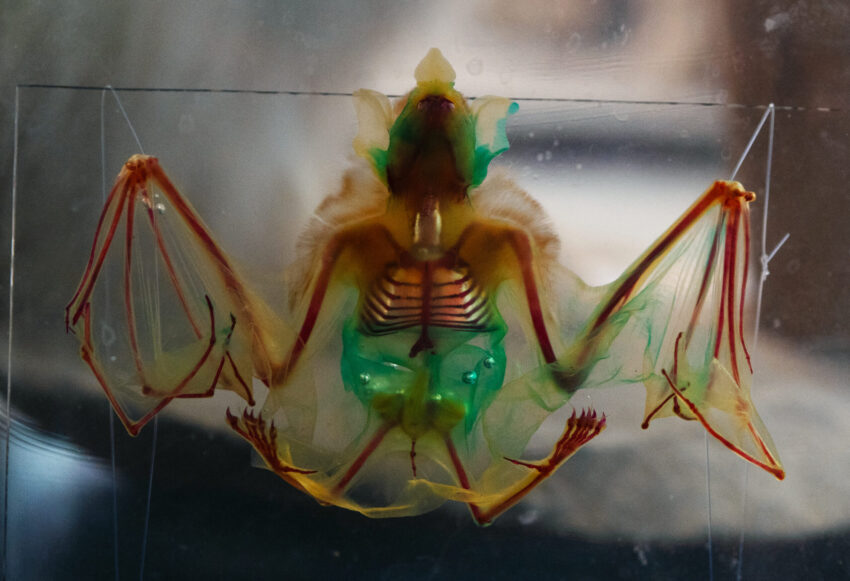
Bat specimens in a variety of forms are sold online to customers globally. Taxidermy, skeletons, diaphonized and encased specimens can be found for sale online. A 2024 study by Coleman et al found  specimens of one species, the painted bat (Kerivoula picta), in coffins and made into fashion accessories.

Painted bat specimens found for sale during the study (Coleman, J., et al, 2024). Most specimens I found were in similar forms to (b) and (c).

As of publication of this article, I was able to find bat specimens being sold from the U.S., U.K., and Canada — oftentimes selling species that are not native to the seller’s country. Many of the websites selling exotic bat specimens claim their bats are sourced sustainably and ethically, so let’s verify these claims.

Table of Contents

Claims of Sustainability

Non-threatened Species

Several private sellers claim that they only sell bat species that are classified as “Least Concern” by the IUCN. The implication is that if a species is not listed as vulnerable, threatened or endangered, that its sale is sustainable.

In some cases this claim was simply false. Several shops sold Painted Bats, a species which was reclassified to “Near-Threatened” in 2019. The Javan Slit-faced Bat (Nycteris javanica), listed on one site, was classified as “Vulnerable” in 2021. Another species listed for sale, the Java Giant Mastiff bat (Otomops formosus), is “Data Deficient” according to the IUCN. At the very least, some of these businesses are failing to properly research the exotic species they sell, and some may be intentionally misleading customers. 

Furthermore, a species being classified as “Least Concern” by the IUCN does not mean harvesting practices are sustainable. Over half of all bat species classed as Least Concern have unknown population trends. Additionally, hunting rates for many species is unknown. It is difficult if not impossible to verify hunting as sustainable when both bat populations and hunting rates are unknown.

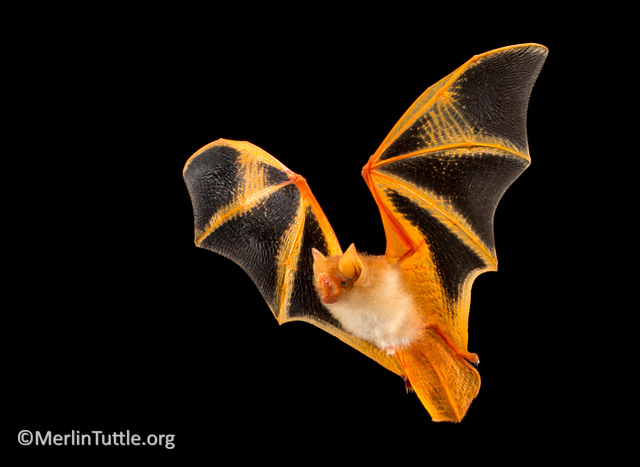
A Painted Woolly Bat (Kerivoula picta).

Natural Deaths

Some sellers in Coleman et al’s study is that the bats sold were not killed, but rather died naturally in the wild and collected.

In the case of the painted bat, it is not possible to collect the number of bats in good enough condition to support the ornamental trade. Painted bats sold online are the result of hunting.

This applies to other species as well. Bats that die in the wild quickly begin to decompose. It is doubtful that complete bat specimens with no visible signs of decay were found deceased naturally in the wild, especially in quantity. 

Population Control

Another claim made is that bats were killed ethically for the purposes of population or pest control. One website claimed bats sold were, “byproducts of wildlife population control programs or pest control.” 

One website's policy on bats they sell claiming specimens are often, "byproducts of wildlife population control programs or pest control."

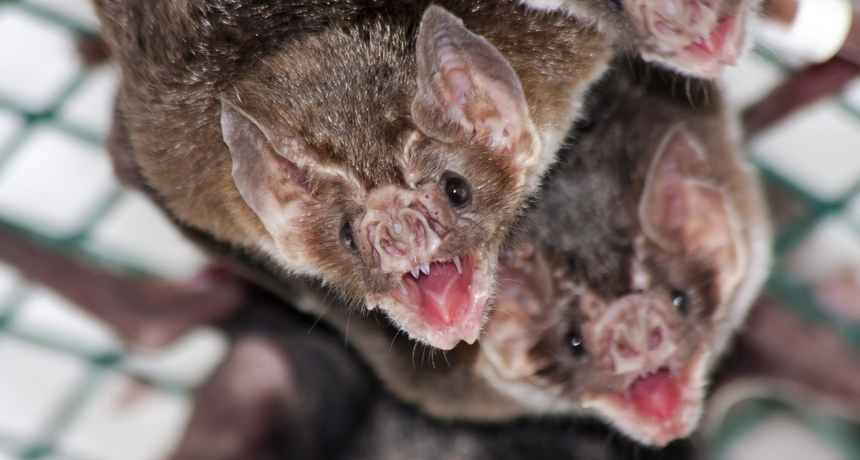
Bats are culled for various reasons. In Latin America, culls are frequently conducted against the Common Vampire Bat (Desmous rotundus) to prevent the spread of rabies. Australian fruit bats are killed to prevent the spread of viruses and limit damage to fruit crops. Fruit bats are also culled in Africa and Asia to limit damage to fruit crops.

While the culling of bats is done as forms of, “population control” and “pest control,” this does not mean these practices are effective, sustainable or ethical. 

Research has found culls ineffective in managing both disease and agricultural damage. Several studies out of Latin America have found that killing vampire bats did not prevent the spread of rabies or reduce viral load in bats (Streicker et al, 2012; Viana et al, 2023.) It does, however, harm other bat species that share roosts with vampire bats.

Oasalehm 2017
A pair of Common Vampire Bats (Desmodus rotundus) grooming each other. [Credit: Oasalehm, 2017]

In Australia, flying foxes are culled both legally and illegally to combat disease and agricultural damage. Half of the native flying fox species have seen significant population declines (Chapter 10, Schneeberger & Voigt, 2016). Between 2015-2016, over 30,000 Mascerene Flying Foxes (Pteropus niger) were killed in the African nation of Mauritius in attempts to reduce damage to fruit crops — or 37 per cent of the species’ total population. The result of these culls was the species being re-listed by the IUCN as “Endangered” in 2017.

Culling negatively impacts bats, endangers populations, and is ineffective. This brings into question vague claims that the selling of bats killed by these practices is sustainable, especially when the statements made by sellers are vague and generalized to every species listed for sale. 

Captive Bred

"Statements that bats were captive-bred are absurd—bat farms are nonexistent."

Coleman J., et al (2024) Tweet

Coleman et al mention sellers claiming bats are captive bred. Fruit bats can and have been captive bred by zoos and for research, but they are not farmed for sale. Additionally, captive breeding of insectivorous bats has been deemed unfeasible.

As of the publication of this article, I was unable to find sellers claiming bats were captive-bred. However, I thought it was still important to address in case someone else comes across the claim.

Scientists and Conservationists Agree

Both bat researchers and conservationists say the trade of bat specimens is unsustainable and unethical. It is simply not possible to hunt specimens sustainably and ethically for international trade and ethically given the lack of data on bat populations and hunting rates. The trade of bat specimens for ornamental use and oddity collecting is detrimental to bats and further endangers species, many of which are already at risk.

"We refute any assertion that the online bat trade is ethical... These bats were hunted. Further, visibly lactating females (based on appearance of the nipples) in photos confirms that harm extends to dependent pups whose mothers are taken.”

Coleman J., et al (2024) Tweet

While some cultures do hunt bats traditionally for ornamental uses, Coleman et al say that the ornamental trade is distinct from these practices. Indigenous people in a region hunting bats to use ceremonially for jewelry is not the same as the mass harvesting of bats to sell to people primarily outside of the bats’ native range.

The bat trade is a commodification of wildlife that exploits and endangers bat populations long term. When bat populations around the world are already facing threats from agriculture, logging, urbanization, disease, and climate change among other issues, hunting is an additional, avoidable pressure on populations. 

The Good News

While bat specimens are still readily available online, there has been significant headway when it some to the sale of bats. As of July 2024, Etsy has banned the sale of bats. Ebay also prohibits the sale of bats and their parts. The prohibition of the sale of bats on these massive platforms helps protect bats and set a precedence for better retail practices. 

Better Practices

  • Don’t buy bat specimens. The ornamental bat trade is unsustainable and unethical. Bat researchers and conservationists agree bats should NOT be bought and sold for decoration or collecting.
  • For those who still want bat-themed decor, there are alternative to real bat specimens. Felted and sewn options exist, some of which are hyperrealistic. Realistic replica skulls and skeletons can be found as well.
  • Share the impacts of bat harvesting and collecting on bats. Many of those who buy these specimens are unaware of the harms, and are less likely to buy bats if they know the costs. 

Read More

Is the Bat Trade Sustainable?

November 3, 2025 No Comments

It’s easy to find bat and other exotic animal specimens, especially with the rise of social media and online marketplaces.

Read More »

Red List Friends: The Painted Woolly Bat

October 31, 2025 No Comments

The Red List Friends is a series showcasing some of the world’s at-risk species from the IUCN’s Red List of

Read More »

10 Major Threats to Bats Worldwide

October 29, 2025 No Comments

Bats play important roles in our ecosystems and economies, but they also face a variety of threats — many of

Read More »

Share this:

  • Click to share on X (Opens in new window) X
  • Click to share on Facebook (Opens in new window) Facebook

Leave a Reply Cancel reply

Your email address will not be published. Required fields are marked *

  • November 3, 2025 by Taylor Holmes Is the Bat Trade Sustainable?
  • October 31, 2025 by Taylor Holmes Red List Friends: The Painted Woolly Bat
  • October 29, 2025 by Taylor Holmes 10 Major Threats to Bats Worldwide
  • October 24, 2025 by Taylor Holmes What is White-Nose Syndrome?
  • September 17, 2025 by Taylor Holmes Backyard Friends: The Canada Goose
  • YouTube
  • Instagram
  • TikTok
  • Tumblr
  • LinkedIn

Subscribe

©2025
 

Loading Comments...