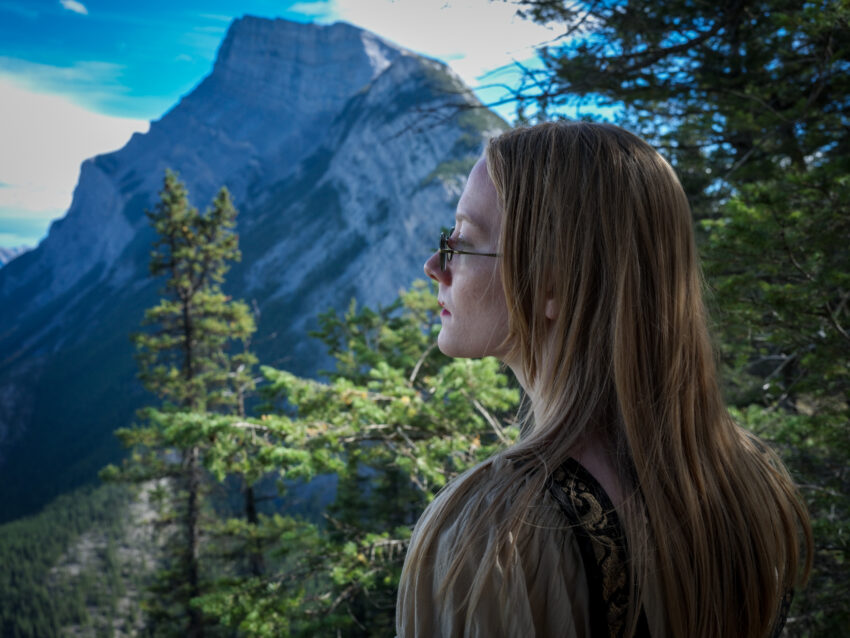
Come with me on an adventure through the Canadian Rockies!
Within this magnificent mountain range you can find stunning scenery, wondrous wildlife, fascinating fossils and so much more. This video will explore the history — both human and natural — of some of well-known spots throughout Canada’s Rocky and Columbia mountain ranges. We’ll explore 1.5 billion years of earth and human history, and how it all shaped the Rockies we see today.
Below is some additional information for your enjoyment and reference.
Indigenous Peoples
Long before Canada as we know it existed, Indigenous people inhabited this land. My country has incredible Indigenous cultural and linguistic diversity — which I try to touch on in my video.
However, while editing this project it became apparent that I refer to the same Indigenous groups using various names, both the traditional names (how these groups refer to themselves) and exonyms (names given to these groups by outsiders)… oops…
Below you can find a quick reference listing Indigenous groups from the areas visited, their various names, and some other information about the people.
*The list is organized by Treaty (or lack thereof), then alphabetized.
Indigenous Name
Additional Information
Cree
Treaty 6 & 7
The Cree are one of Canada largest First Nations macro communities, comprised of several smaller Cree First Nations that span much of Canada’s plains and boreal forests. In Alberta, Plains Cree (nêhiyawak/ᓀᐦᐃᔭᐘᐠ) and Woodland (nîhithaw/ᓃᐦᐃᖬᐘᐠ) Cree are the most predominant groups.
Cree languages are part of the Algonquin language family, and are incredibly diverse with five main dialects and several subdivisions. Spanning from Northwest Territories, to Alberta, to Labrador, Cree is the most widely spoken Indigenous language in Canada.
Îyârhe Nakoda
Treaty 7
Also known as the Nakoda (sometimes Nakota) or Stoneys. The Nakoda live in Western Canada and the United States, including Alberta, Saskatchewan and Montana. In Alberta there are three Nakoda Nations: Bearspaw, Chiniki and Goodstoney.
Nakoda is part of Siouan language family, and is linguistically related to Assiniboine, Dakota, Lakota and Osage (among others). For those curious, you can hear spoken Nakoda here.
Niitsitapi
Treaty 7
Also known as the Blackfoot Confederacy or Siksikaitsitapi. Comprised of the Siksiika, Piikani (Piegan), and Kainai (Blood) nations. The Niitstitapi live in the northwestern plains of North America, including Alberta and Montana.
The Niitsitapi speak a language known as Blackfoot, Niitsí’powahsin (ᖹᒧᐧᑲᖷᐦᓱᐡ), or Siksiká (ᓱᖽᐧᖿ), which has several dialects. Part of the Algonquin language family, Blackfoot is linguistically related to Cree, Anishinaabe, Shawnee and Mi’kmaq (among others).
Tsúùt’ínà
Treaty 7
The Tsúùt’ínà (formerly known as the Saahsi, Sarcee or Sarsi) is a First Nation located directly west of Calgary, Alberta.
The Tsúùt’ínà language (known as Tsúùt’ínà Gūnáhà) is part of Athabaskan language family, and is linguistically related to Dëne Sųłıné (Chipewyan), Tłı̨chǫ (Dogrib), Tutchone, and Navajo (among others).
Ktunaxa
Negotiating Treaty
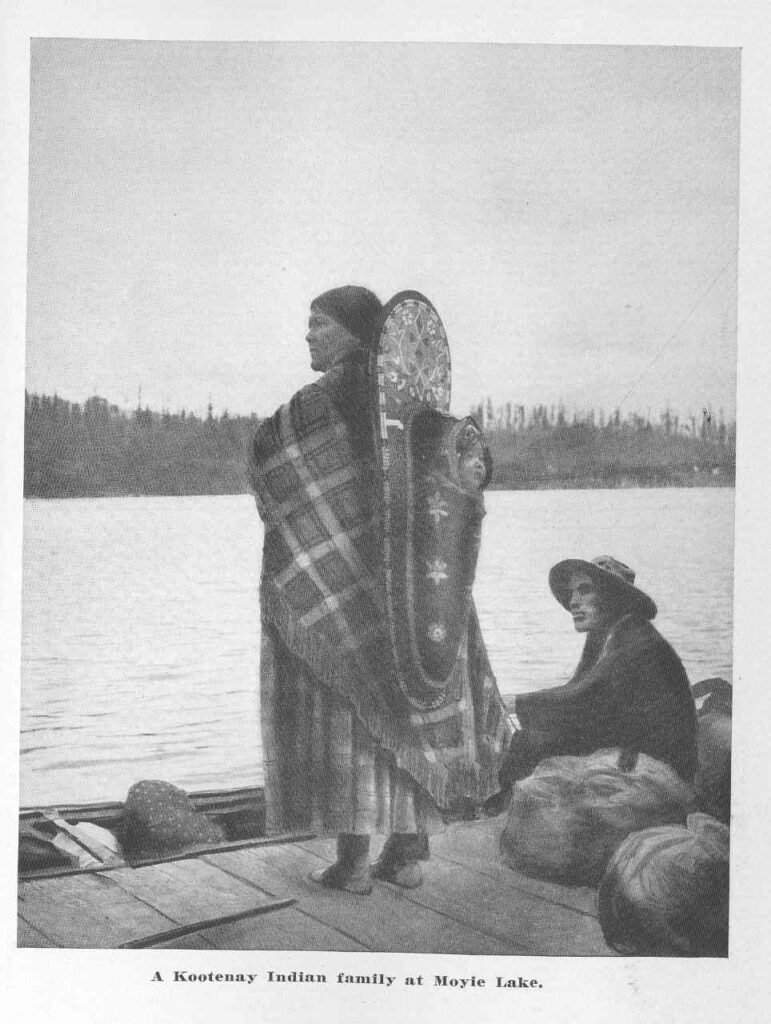
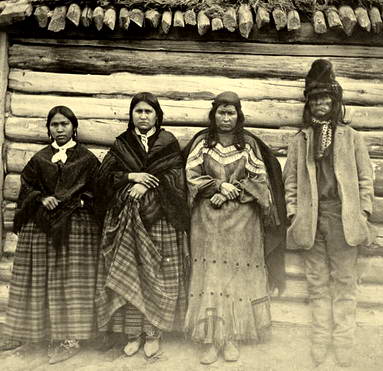
The Ktunaxa are also known as the Ksanka, Kootenay (Canada), or Kootenai (United States). Indigenous to Western Canada and the United States, Ktunaxa bands live in British Columbia, Idaho and Montana.
The Kutenai language is considered a language isolate, meaning it has no known linguistic relatives. There have been theories placing this language as part of a macro-Algonquin, or macro-Salishan language families, but these claims are not broadly accepted.
Secwépemc
Negotiating Treaty
The Secwépemc are also known as the Shuswap. This First Nation lives in the interior of British Columbia.
The traditional language, Secwepemctsín is part of the Salishan language family which also includes St’át’imcets (Lillooet), Nuxalk (Bella Coola), and Squamish (among others).
Sinixt
No signed treaty in Canada
Jay Treaty (United States)
The Sinixt are also known as the Sin-Aikst, Senijextee, or Arrow Lakes Band are a First Nation located primarily in the West Kootenay region of British Columbia, and eastern Washington. The Sinixt were declared “extinct” in 1956 by the Canadian government after decades of violent colonization. In April 2021, the Supreme Court of Canada recognized the Sinixt as a First Nation after a lengthy legal battle with members of the Sinixt nation.
The Sinixt dialect is on of several dialects of Colville-Okanagan language. It is also part of the broader Salishan language family, alongside Secwepemctsín and other languages.
Syilx
No signed treaty in Canada
The Syilx people are also known as the Okanagan, Okinagan, or Suknaqinx. Their traditional territory spans the Canada–United States border, and live in what is now British Columbia and Washington.
The Syilx language is known as Nsyilxn. Like the Sinixt dialect, Nsyilxn is one of several dialects of Colville-Okanagan language. It is also part of the broader Salishan language family, alongside Secwepemctsín, Syilx and other languages.
Mount Rundle Thrust Fault
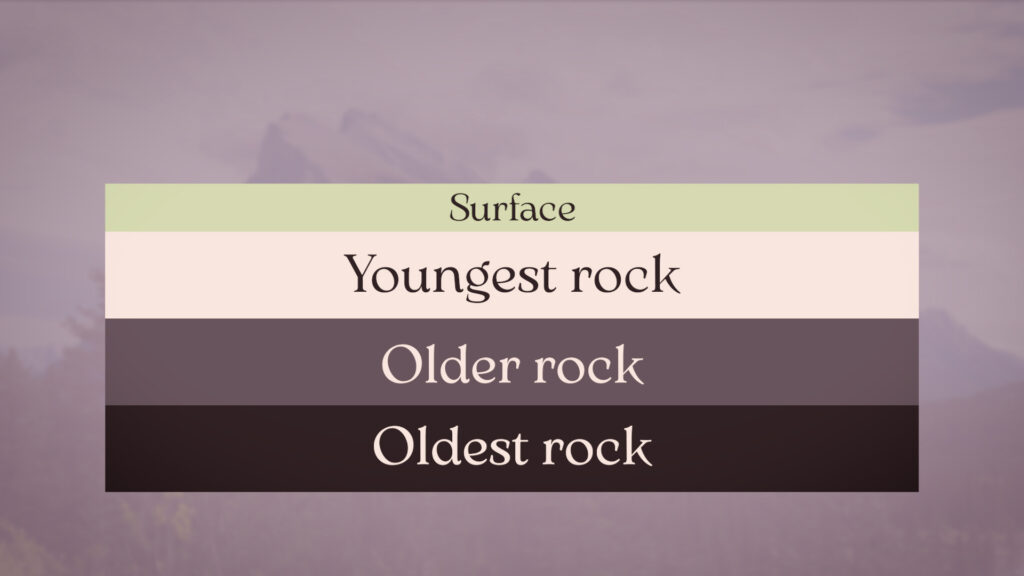
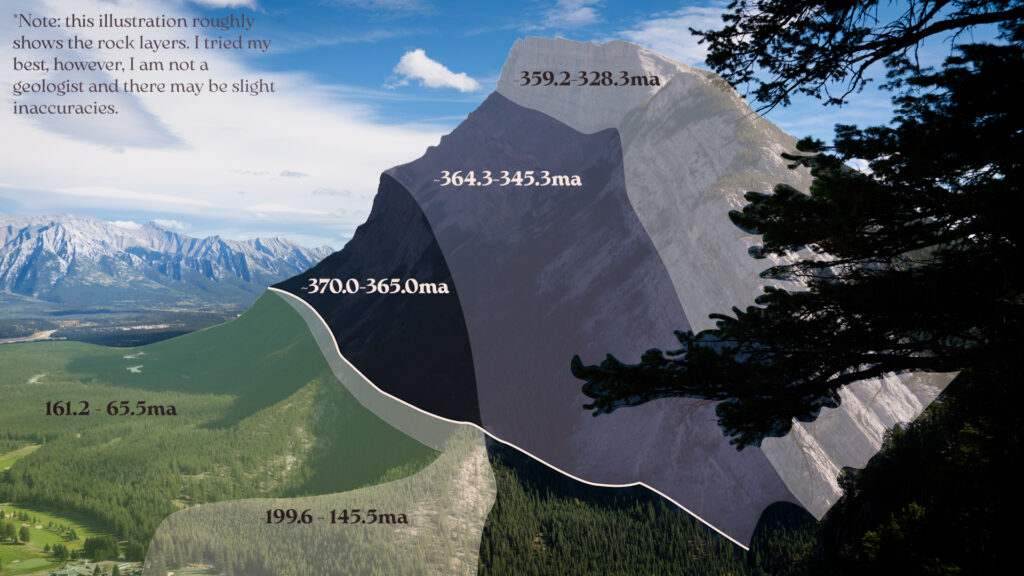
Typically, rock layers form on top of one another, which means the lower layers are older than the upper layers — but not Mount Rundle!
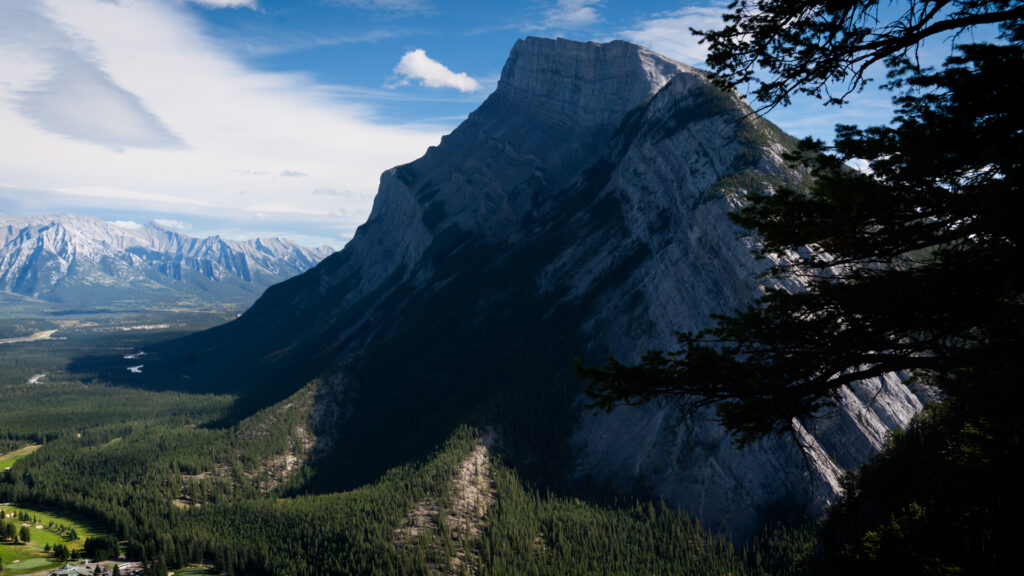
Mount Rundle is a type of rock formation known as a thrust fault. Thrust faults occur when the Earth’s crust breaks, and older rock layers and thrust above newer layers of rock.
Millions of years ago, the Rockies we see today didn’t exist. The area that is now Banff National Park was the bottom of a shallow sea filled with corals, clams and other small invertebrates.
During the formation of the Rockies, powerful tectonic forces raised, rippled and eventually split the rock layers forming the Mount Rundle Thrust Fault at the base of the mountain.
As a result of Mount Rundle Thrust Fault, the rocks at the peak of Mount Rundle are between ~200-300 million years older than the rocks at the base of the mountains!
Mount Rundle Rock Layers:
*Listed from youngest to oldest*
Kootenay Formation
161.2-65.5 million years ago (Cretaceous Period)
Fernie Formation
199.6-145.5 million years ago (Jurassic Period)
Livingstone Formation
359.2-328.3 million years ago (Carboniferous Period)
Banff Formation
362.3-345.3 million years ago (Carboniferous Period)
Upper Devonian
370.0-365.0 million years ago (Devonian Period)
“Kananaskis Country.” (N.D.). Alberta Parks. Accessed December 2, 2024
“About Kananaskis.” (N.D.). Canmore Kananaskis. Accessed December 2, 2024
“History of Kananaskis.” (N.D.). Canmore Kananaskis. Accessed December 2, 2024
“Kananaskis Country.” (N.D.). Kananaskis.com. Accessed December 2, 2024
“Lac des Arcs… a stopover.” (N.D). Government of Alberta. Accessed September 21, 2024 via Lac des Arcs Viewpoint, near Exshaw, Alberta.
Pullan, B. (2021). “These Banff Mountains Had Indigenous Names.” Gripped. Accessed December 4, 2024
“Tunnel Mountain Summit, Alberta, Canada.” (N.D.). AllTrails. Accessed February 28, 2025
“Mount Rundle.” (N.D.). Canadian Rockies Database. Accessed December 5, 2024
“Livingstone Formation.” (2008). Weblex Canada. Accessed December 20
“Kootenay Group.” (2007). Weblex Canada. Accessed December 20, 2024
“Roadside Attractions.” (2024). Mount Revelstoke National Park. Accessed December 20, 2024
“Giant Cedars Boardwalk.” (N.D.). Parks Canada. Accessed October 2024 at Giant Cedars Boardwalk near Revelstoke, B.C.
“Learn.” (N.D.). Frank Slide Interpretive Centre. Accessed December 23, 2024
“Frank Slide.” (N.D.). Alberta Geological Survey. Accessed December 24, 2024
“Waterton Lakes National Park.” (N.D.). Encyclopedia Britannica. Accessed December 26, 2024
“125 of our favourite Waterton facts.” (N.D.). Parks Canada. Accessed December 26, 2024
“Park History – Waterton Lakes National Park.” (N.D.). Parks Canada. Accessed December 26, 2024
“Prince of Wales Hotel National Historic Site.” (N.D.). Parks Canada. Accessed December 26, 2024
“Geology and landforms.” (N.D.). Parks Canada. Accessed December 26, 2024
“Geology and Geomorphology.” (N.D.). Waterton Park. Accessed December 26, 2024
Marshall, M. (2024). “Timeline: The evolution of life.” New Scientist. Accessed December 26, 2024
Read more:

Backyard Friends: Black-capped Chickadee
The Backyard Friends is a series about animal pals that you might find in your backyard. No matter where we are, we are a part

New Year Update!
We have started the new year, so I thought it would be a good time to give a little update on both my website and

Endorheic Lakes: The lakes that go nowhere
Most lakes go somewhere… Into a river, another lake, the ocean, something. However, some lakes feed no river, pour into no sea. These are endorheic