The Yellow Bird
Menu
  • home
  • posts
  • portfolio
  • Resume
Menu

Category: Travel

Frank Slide: Canada’s Deadliest Landslide

Posted on August 25, 2025December 6, 2025 by Taylor Holmes

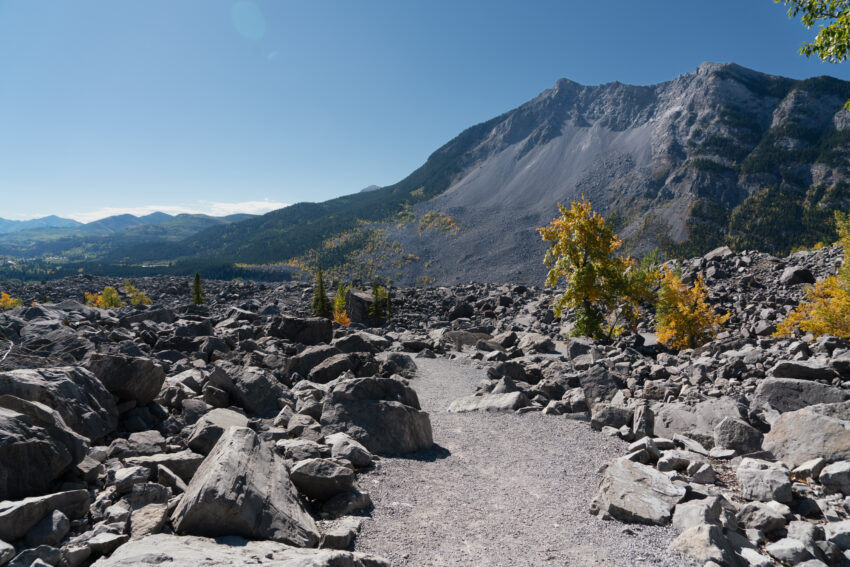
Early in the morning of April 29, 1903, Turtle Mountain came tumbling down, the small town of Frank in its path. Around 90 people lost their lives in the slide, though the exact number remains unknown.

This video explores the history of Frank, the slide, its causes, and how likely another landslide is.

Citations
  1. “Learn.” (N.D.). Frank Slide Interpretive Centre. 
  2. “Facts” (N.D.). Frank Slide Interpretive Centre.
  3. “Frank Slide.” (N.D.). Alberta Geological Survey.
  4. Bonikowsky, L. (2015). “Frank Slide: Canada’s Deadliest Rockslide.” The Canadian Encyclopedia.
  5. Langenberg, C.W., et al. (2007). “Structural Geology of the Turtle Mountain Area near Frank, Alberta.” Alberta Energy and Utilities Board. 
  6. “Historical Monitoring on Turtle Mountain.” (N.D.) Alberta Geological Survey. 

Read more:

What are Chinook Winds?

February 28, 2026 No Comments

Chinook winds are a fascinating phenomenon experienced in the eastern Rocky Mountains and western Canadian Prairies and Great Plains. Learn about their formation, effects, and

Read More »

Backyard Friends: Black-capped Chickadee

January 17, 2026 No Comments

The Backyard Friends is a series about animal pals that you might find in your backyard. No matter where we are, we are a part

Read More »

New Year Update!

January 1, 2026 No Comments

We have started the new year, so I thought it would be a good time to give a little update on both my website and

Read More »
Category: HistoryNatureTravel

Rocky Mountain Adventures!

Posted on August 6, 2025January 1, 2026 by Taylor Holmes

Come with me on an adventure through the Canadian Rockies!

Within this magnificent mountain range you can find stunning scenery, wondrous wildlife, fascinating fossils and so much more. This video will explore the history — both human and natural — of some of well-known spots throughout Canada’s Rocky and Columbia mountain ranges. We’ll explore 1.5 billion years of earth and human history, and how it all shaped the Rockies we see today.

Below is some additional information for your enjoyment and reference.

Indigenous Peoples

Long before Canada as we know it existed, Indigenous people inhabited this land. My country has incredible Indigenous cultural and linguistic diversity — which I try to touch on in my video. 

However, while editing this project it became apparent that I refer to the same Indigenous groups using various names, both the traditional names (how these groups refer to themselves) and exonyms (names given to these groups by outsiders)… oops…

Below you can find a quick reference listing Indigenous groups from the areas visited, their various names, and some other information about the people.

*The list is organized by Treaty (or lack thereof), then alphabetized. 

Indigenous Name

Additional Information

Cree

Treaty 6 & 7

The Cree are one of Canada largest First Nations macro communities, comprised of several smaller Cree First Nations that span much of Canada’s plains and boreal forests. In Alberta, Plains Cree (nêhiyawak/ᓀᐦᐃᔭᐘᐠ) and Woodland (nîhithaw/ᓃᐦᐃᖬᐘᐠ)  Cree are the most predominant groups.

Cree languages are part of the Algonquin language family, and are incredibly diverse with five main dialects and several subdivisions. Spanning from Northwest Territories, to Alberta, to Labrador, Cree is the most widely spoken Indigenous language in Canada. 

A group of Cree from (probably) Montana, 1893.

Îyârhe Nakoda

Treaty 7

Also known as the Nakoda (sometimes Nakota) or Stoneys. The Nakoda live in Western Canada and the United States, including Alberta, Saskatchewan and Montana. In Alberta there are three Nakoda Nations: Bearspaw, Chiniki and Goodstoney.

Nakoda is part of Siouan language family, and is linguistically related to Assiniboine, Dakota, Lakota and Osage (among others). For those curious, you can hear spoken Nakoda here. 

Nakoda Chief Walking Buffalo in Alberta, 1910

Niitsitapi

Treaty 7

Also known as the Blackfoot Confederacy or Siksikaitsitapi. Comprised of the Siksiika, Piikani (Piegan), and Kainai (Blood) nations. The Niitstitapi live in the northwestern plains of North America, including Alberta and Montana.

The Niitsitapi speak a language known as Blackfoot, Niitsí’powahsin (ᖹᒧᐧᑲᖷᐦᓱᐡ), or Siksiká (ᓱᖽᐧᖿ), which has several dialects. Part of the Algonquin language family, Blackfoot is linguistically related to Cree, Anishinaabe, Shawnee and Mi’kmaq (among others).

Blackfoot people in the United States (probably Montana), 1930.

Tsúùt’ínà

Treaty 7

The Tsúùt’ínà (formerly known as the Saahsi, Sarcee or Sarsi) is a First Nation located directly west of Calgary, Alberta.

The Tsúùt’ínà language (known as Tsúùt’ínà Gūnáhà) is part of Athabaskan language family, and is linguistically related to Dëne Sųłıné (Chipewyan), Tłı̨chǫ (Dogrib), Tutchone, and Navajo (among others).

Tsuut'ina horse riders at the Calgary Stampede, 2005.

Ktunaxa

Negotiating Treaty

The Ktunaxa are also known as the Ksanka, Kootenay (Canada), or Kootenai (United States). Indigenous to Western Canada and the United States, Ktunaxa bands live in British Columbia, Idaho and Montana.

The Kutenai language is considered a language isolate, meaning it has no known linguistic relatives. There have been theories placing this language as part of a macro-Algonquin, or macro-Salishan language families, but these claims are not broadly accepted.

Ktunaxa family in British Columbia, 1908

Secwépemc

Negotiating Treaty

The Secwépemc are also known as the Shuswap. This First Nation lives in the interior of British Columbia.

The traditional language, Secwepemctsín is part of the Salishan language family which also includes St’át’imcets (Lillooet), Nuxalk (Bella Coola), and Squamish (among others).

Secwépemc Chief Jean Baptiste Lolo and his daughters in Kamloops, British Columbia, ca. 1850

Sinixt

No signed treaty in Canada

Jay Treaty (United States)

The Sinixt are also known as the Sin-Aikst, Senijextee, or Arrow Lakes Band are a First Nation located primarily in the West Kootenay region of British Columbia, and eastern Washington. The Sinixt were declared “extinct” in 1956 by the Canadian government after decades of violent colonization. In April 2021, the Supreme Court of Canada recognized the Sinixt as a First Nation after a lengthy legal battle with members of the Sinixt nation.

The Sinixt dialect is on of several dialects of Colville-Okanagan language. It is also part of the broader Salishan language family, alongside Secwepemctsín and other languages.

Syilx

No signed treaty in Canada

The Syilx people are also known as the Okanagan, Okinagan, or  Suknaqinx. Their traditional territory spans the Canada–United States border, and live in what is now British Columbia and Washington.

The Syilx language is known as Nsyilxn. Like the Sinixt dialect, Nsyilxn is one of several dialects of Colville-Okanagan language. It is also part of the broader Salishan language family, alongside Secwepemctsín, Syilx and other languages.

Syilx fishermen on Lake Okanagan, 1908.

Mount Rundle Thrust Fault

Typically, rock layers form on top of one another, which means the lower layers are older than the upper layers — but not Mount Rundle!

Typical formation of rock strata (layers). In sedimentary rock, newer layers form on top of older layers as sediment deposits.

Mount Rundle is a type of rock formation known as a thrust fault. Thrust faults occur when the Earth’s crust breaks, and older rock layers and thrust above newer layers of rock. 

Millions of years ago, the Rockies we see today didn’t exist. The area that is now Banff National Park was the bottom of a shallow sea filled with corals, clams and other small invertebrates. 

During the formation of the Rockies, powerful tectonic forces raised, rippled and eventually split the rock layers forming the Mount Rundle Thrust Fault at the base of the mountain. 

Shallow Seas
Mount Rundle, like the rest of the Rockies, was once the bottom of a shallow sea and relatively flat.
Tectonic movement
As the Pacific plate began to thrust under the North American plate, the formerly flat seabed begins to buckle and raise.
Movement Continues
The crust continues to move and fold as tectonic plates move.
Layers Folding
As the earth continues to buckle and bend, the Earth's layers begin to fold over each other.
Crust Breaks
Eventually the force grows to be too much, and the crust snaps! This creates a fault, or a break in the Earth's crust at the base of Mount Rundle
Thrust Above
Despite the crust breaking, the earth keeps moving, thrusting rock upward and over itself.
Erosion Reveals
Over millions of years the upper layers of rock are weathered away. In the case of Mount Rundle, much older rock is exposed at the top of the mountain than the base.

As a result of Mount Rundle Thrust Fault, the rocks at the peak of Mount Rundle are between ~200-300 million years older than the rocks at the base of the mountains!

Mount Rundle in Banff National Park, Alberta.
Graphic showing the approximate ages of the rock layers that make up Mount Rundle.

Mount Rundle Rock Layers:

*Listed from youngest to oldest*

Kootenay Formation

161.2-65.5 million years ago (Cretaceous Period)

Fernie Formation

199.6-145.5  million years ago (Jurassic Period)

Livingstone Formation

359.2-328.3  million years ago (Carboniferous Period)

Banff Formation

362.3-345.3  million years ago (Carboniferous Period)

Upper Devonian

370.0-365.0  million years ago (Devonian Period)

Citations


  1. “Kananaskis Country.” (N.D.). Alberta Parks. Accessed December 2, 2024 

  2. “About Kananaskis.” (N.D.). Canmore Kananaskis. Accessed December 2, 2024 

  3. “History of Kananaskis.” (N.D.). Canmore Kananaskis. Accessed December 2, 2024 

  4. “Kananaskis Country.” (N.D.). Kananaskis.com. Accessed December 2, 2024

  5. Rayburn, A. (1994). “Naming Canada: stories about place names from Canadian Geographic.” University of Toronto Press. p. 183-185. Accessed December 2, 2024 

  6. “Lac des Arcs… a stopover.” (N.D). Government of Alberta. Accessed September 21, 2024 via Lac des Arcs Viewpoint, near Exshaw, Alberta.

  7. Pullan, B. (2021). “These Banff Mountains Had Indigenous Names.” Gripped. Accessed December 4, 2024 

  8. “Renaming Tunnel Mountain to Buffalo Mountain in Banff, AB, Canada.” (2016). Accessed January 11, 2025 

  9. “Tunnel Mountain Summit, Alberta, Canada.” (N.D.). AllTrails. Accessed February 28, 2025 

  10. “Mount Rundle.” (N.D.). Canadian Rockies Database. Accessed December 5, 2024 

  11. Price, R. (2003). “A transect of the southern Canadian Cordillera from Calgary to Vancouver.” Accessed December 4, 2024 

  12. Belyea, H. (1960). “The Story of the Mountains in Banff National Park.” Park’s Canada History. Accessed December 4, 2024 

  13. “Convergent Plate Boundaries – Subduction Zones.” (2020). U.S. National Park Service. Accessed February 28, 2025 

  14. “Livingstone Formation.” (2008). Weblex Canada. Accessed December 20 

  15. “Kootenay Group.” (2007). Weblex Canada. Accessed December 20, 2024 

  16. “Roadside Attractions.” (2024). Mount Revelstoke National Park. Accessed December 20, 2024 

  17. “Giant Cedars Boardwalk.” (N.D.). Parks Canada. Accessed October 2024 at Giant Cedars Boardwalk near Revelstoke, B.C.

  18. “Old Growth Inland Rainforest – Glacier National Park.” (N.D.). Government of Canada – Parks Canada. Accessed December 21, 2024 

  19. “Your Guide to Revelstoke’s Inland Temperate Rainforest.” (N.D.) See Revelstoke. Accessed December 21, 2024 

  20. “Learn.” (N.D.). Frank Slide Interpretive Centre. Accessed December 23, 2024 

  21. “Frank Slide.” (N.D.). Alberta Geological Survey. Accessed December 24, 2024 

  22. Bonikowsky, L. (2015). “Frank Slide: Canada’s Deadliest Rockslide.” The Canadian Encyclopedia. Accessed December 23, 2024 

  23. “Waterton Lakes National Park.” (N.D.). Encyclopedia Britannica. Accessed December 26, 2024 

  24. “125 of our favourite Waterton facts.” (N.D.). Parks Canada. Accessed December 26, 2024 

  25. “Park History – Waterton Lakes National Park.” (N.D.). Parks Canada. Accessed December 26, 2024 

  26. “Charles Waterton.” (N.D.). Legacies of British Slavery Database – University College London. Accessed December 26, 2024 

  27. McNish, J. (N.D.). “John Edmonstone: the man who taught Darwin taxidermy.” The Natural History Museum. Accessed December 26, 2024 

  28. “Prince of Wales Hotel National Historic Site.” (N.D.). Parks Canada. Accessed December 26, 2024 

  29. “Geology and landforms.” (N.D.). Parks Canada. Accessed December 26, 2024 

  30. “Geology and Geomorphology.” (N.D.). Waterton Park. Accessed December 26, 2024 

  31. “Waterton Resource Guide – Geology & Landforms.” (N.D.) Waterton Lakes National Park. Accessed December 26, 2024 

  32. Marshall, M. (2024). “Timeline: The evolution of life.” New Scientist. Accessed December 26, 2024 

Read more:

What are Chinook Winds?

February 28, 2026 No Comments

Chinook winds are a fascinating phenomenon experienced in the eastern Rocky Mountains and western Canadian Prairies and Great Plains. Learn about their formation, effects, and

Read More »

Backyard Friends: Black-capped Chickadee

January 17, 2026 No Comments

The Backyard Friends is a series about animal pals that you might find in your backyard. No matter where we are, we are a part

Read More »

New Year Update!

January 1, 2026 No Comments

We have started the new year, so I thought it would be a good time to give a little update on both my website and

Read More »
Category: NatureTravel

Canada’s Hidden Rainforest: Giant Cedars Boardwalk

Posted on April 1, 2025January 1, 2026 by Taylor Holmes

In the Columbia Mountains lies Mount Revelstoke National Park, home to one of the world’s only Inland Temperate Rainforests (the other two are located in southern Siberia and Russia’s far east). This unique ecosystem is home to hundreds of species, and is one of the most productive and biodiverse regions in Canada.

In my latest video, I explore the Giant Cedars Boardwalk, and old-growth rainforest in Mount Revelstoke National Park. This boardwalk takes you through the old growth, where you can see 500 year-old western red cedars and dozens of species of animals and fungus. 

Below is more information about the Inland Temperate Rainforest, and the Giant Cedars Boardwalk Trail. You can find a list highlighting various species found in the ecosystem, as well as directions to the Giant Cedars Boardwalk and information about the hike.

Flora, Fauna & Fungi

The Inland Temperate Rainforest is home to hundreds of species. Below is a selection of some of the species found in the rainforest for reference, but note that the list is incomplete.

Flora

Trees:

  • Western redcedar (Thuja plicata)

  • Western hemlock (Tsuga heterophylla)

  • Pacific yew (Taxus brevifolia)

  • Subalpine fir (Abies lasiocarpa)

  • Douglas fir (Pseudotsuga menziesii)

Ferns:

  • Oak fern (Gymnocarpium dryopteris)

  • Lady fern (Athyrium filix-femina)

Species composition of the Interior Cedar Hemlock Ecozone

Other plants:

  • Devil’s club (Oplopanax horridus)

  • Mountain boxwood (Pachistima myrsinites)

  • Oval-leafed blueberry (Vaccinium ovalifolium)

  • Queen’s cup (Clintonia uniflora)

  • Fen orchid (Liparis loeselii)*

  • Pale bladderwort (Utricularia ochroleuca)*

  • Mountain moonwort (Botrychium montanum)*

Devil's club (Oplopanax horridus) found along the Giant Cedars Boardwalk. This is one of the most common understory plants in the rainforest.

Fauna

Large Mammals:

  • Mountain caribou (Rangifer tarandus caribou)*

  • Moose (Alces alces)

  • Grizzly bear (Ursus arctos horribilis)

  • Black bear (Ursus americanus)

  • Wolverine (Gulo gulo)

Small Mammals:

  • Northern long-eared bat (Myotis septentrionalis)*

  • Little brown bat (Myotis lucifugus)*

  • Hoary bat (Lasiurus cinereus)

  • Northern flying squirrel (Glaucomys sabrinus)

  • Southern red-backed vole (Clethrionomys gapperi)

Fungi

Mushrooms & Truffles:

  • Devil’s tooth (Hydnellum peckii)

  • Truffles (Tuber spp.)

  • Phaeocollybia piceae

Lichen: 

  • Cryptic paw lichen (Nephroma occultum)*

  • Pertusaria diluta

In 2007 researchers discovered thirteen tree-dwelling lichen species previously unknown to science in British Columbia’s inland rainforest.

Birds:

  • Golden eagle (Aquila chrysaetos)

  • Bald eagle (Haliaeetus leucocephalus)

  • Osprey (Pandion haliaetus)

  • Pileated woodpecker (Dryocopus pileatus)

  • Chestnut-backed chickadee (Poecile rufescens)

  • Black-capped chickadee (Poecile atricapillus)

  • Pine siskin (Spinus pinus)

Black-capped chickadee

*indicates the species is listed by COSEWIC or the IUCN as at-risk, threatened or endangered.

Hiking Notes:

The trailhead for the Giant Cedars Boardwalk just outside of Revelstoke, B.C.

*Note: When I visited the trail in October 2024, part of the path was closed due to a fallen tree*

Total Distance: 500m (0.31 miles)

Elevation Gain: 28m (91 feet)

The trail is beginner and family friendly. The path comprised of a wooden boardwalk with stairs, with several benches to rest along the way. 

Gallery:

Citations
  1. “Roadside Attractions.” (2024). Mount Revelstoke National Park. Accessed December 20, 2024
  2. “Giant Cedars Boardwalk.” (N.D.). Parks Canada. Accessed October 2024 at Giant Cedars Boardwalk near Revelstoke, B.C. (no link available).
  3. Jones, A. (2017). “7 Other Great Fires of London.” Mental Floss. Accessed December 20, 2024
  4. Højlund, B. (N.D.). “London.” Vikingeskibsmuseet. Accessed December 20, 2024
  5. “Old Growth Inland Rainforest – Glacier National Park.” (N.D.). Government of Canada – Parks Canada.Accessed December 21, 2024
  6. “Your Guide to Revelstoke’s Inland Temperate Rainforest.” (N.D.). See Revelstoke. Accessed December 21, 2024
  7. “Interior cedar – hemlock zone.” (2024). Government of British Columbia. Accessed December 21, 2024
  8. “Interior Cedar Hemlock Biogeoclimatic zone (ICH).” (N.D.). Ministry of Environment – Government of British Columbia. Accessed December 21, 2024
  9. “Interior Cedar – Hemlock Zone.” (N.D.). University of British Columbia – Centre for Forest Conservation Genetics. Accessed December 21, 2024
  10. Finkelstein, M. (2015). “Mount Revelstoke National Park.” The Canadian Encyclopedia. Accessed December 21, 2024
  11. “History of Mount Revelstoke National Park of Canada.” (N.D.). Government of Canada – Parks Canada.Accessed December 21, 2024
  12. “Revelstoke’s First Peoples: Educational and Community Resources.” (N.D.). See Revelstoke. Accessed December 21, 2024
  13. “Cedar.” (2009). Indigenous Foundations – University of British Columbia. Accessed December 21, 2024
  14. “Cedar.” (2009). Indigenous Foundations – University of British Columbia. Accessed December 21, 2024
  15. Cox, S. (2019). “Canada’s forgotten rainforest.” The Narwhal. Accessed January 15, 2025
  16. Cox, S. (2021). “B.C.’s rare inland temperate rainforest is at risk of collapse, scientists warn.” The Narwhal. Accessed January 15, 2025
  17. “New conservancy protects rare ecosystems in Incomappleux Valley.” (2023). Province of British Columbia. Accessed January 15, 2025
  18. “Old growth maps.” (2023). Province of British Columbia. Accessed January 15, 2025

Read more:

What are Chinook Winds?

February 28, 2026 No Comments

Chinook winds are a fascinating phenomenon experienced in the eastern Rocky Mountains and western Canadian Prairies and Great Plains. Learn about their formation, effects, and

Read More »

Backyard Friends: Black-capped Chickadee

January 17, 2026 No Comments

The Backyard Friends is a series about animal pals that you might find in your backyard. No matter where we are, we are a part

Read More »

New Year Update!

January 1, 2026 No Comments

We have started the new year, so I thought it would be a good time to give a little update on both my website and

Read More »
Category: NatureTravel

Exploring Iceland

Posted on July 2, 2024December 6, 2025 by Taylor Holmes

Exploring Iceland | History, Nature & Magic!

Exploring Iceland is a video project showcasing some of Iceland’s famous and noteworthy sights, delving into history, folklore, science, witchcraft, and more! Learn about more than a thousand years of human history on this remote North Atlantic island, as well as the unique natural history of the land of fire and ice! 

Full video will be available July 3, 2024 at 9:00am (MT)!

Below are some of the extra photos and notes from my trip in October. Enjoy!

Hallgrímskirkja

Hallgrímskirkja is an Evangelical-Lutheran church in the heart of Iceland’s capital, Reykjavík. The church was designed by famous Icelandic architect Guðjon Samuelsson, and it’s meant to resemble Iceland’s basalt cliffs. This church is a marvel, once can’t help but be moved when standing beside or within the stark and towering monolith. 

Þingvellir National Park

Þingvellir (Thingvellir) National Park is spectacular on so many levels. It’s a rift valley, which means that the North American and Eurasian tectonic plates are pulling, ripping away from each other at Þingvellir – creating the stunning gorges and valleys throughout the region. Most rifts occur along the sea floor, in the depths away from view, but this is one of the few places on Earth where a rift can be seen and visited without a submarine (The Great Rift Valley in Africa is another). 

In addition to a fascinating natural history, Þingvellir is also a very important place for Iceland’s history and culture. Þingvellir is Icelandic for “Assembly Plains,” and it was here that Iceland’s parliament – the Alþing – convened annually from its establishment in 930 until 1798.

The Alþing was far more than a mere meeting for government. Icelandic Sagas mention beer brewers, food sellers, sword sharpeners and even clowns congregating. The area became a temporary capital of the country during the Alþing, and in many ways Þingvellir laid the foundation for Icelandic culture, language and literature.

Þingvellir National Park. Here a large canyon has formed as the two pieces of earth slowly move away from one another.

Westfjords

The Westfjords in are Iceland’s least populated and least visited region, but it is home to breathtaking and pristine, untouched wilderness. The drive takes you along Iceland’s northwest coast, and meanders in and out of stunning fjords along the way.

One interesting building I came across while in the Westfjords was this out-of-place castle, called Arngerðareyri. Trading began in the region in 1884, but the famous “castle”, known locally as Kastalinn, built in 1929 for a manager of a trading company. Who wouldn’t want to build themself a castle at the mouth of a remote, peaceful Icelandic fjord… I sure do!

One region in the Westfjords, Strandir, is famous for its long history of witchcraft. In addition to the wonderful and fascinating Holmavík Museum of Sorcery and Witchcraft (Which is a must-see if folklore and history are an interest!), there is also Kotbýli kuklarans, the Sorcerer’s Cottage. This turf house is a recreation of what a Sorcerer’s cottage might have looked like during the 17th century Icelandic witch hunts, and consists of 3 connected turf houses made from stones and driftwood according to traditional methods. 

People in Iceland have lived in turf houses since the island was settled around the year 874CE, and the practice continued until 1966. Inside this turf house one can find different objects, reproductions of what might have been in an Icelander’s home 400 years ago. A hearth for cooking (and perhaps concocting potions?). Seal pelts and sheep skins for bedding to keep warm on the cold Arctic nights. Bones from whales and livestock animals, which bored children once pretended were animals or whatever else they could imagine.


Waterfalls

Iceland is famous for its many gorge-ous waterfalls. Of the thousands of waterfalls in the country, I visited three of the more well-known ones: Gullfoss, Seljalandsfoss, and Skógafoss

Water plummeting over the 21 metre edge of Gullfoss' second falls.
Gullfoss from the trailhead.
Birds-eye view of Gullfoss.
Langjökull, the glacier that feeds Gullfoss.
Seljalandsfoss is a 60 metre tall waterfall along Iceland's south coast, and one of the only waterfalls in the world you can walk behind!
Skógafoss is 62 metres tall and is found along the same set of cliffs as Seljalandsfoss.

Disclaimers and Notes:

  •  All images in the blog post are mine. Most of the footage used in the video was captured on a trip to Iceland in October 2023, all other images are credited at the bottom of the page.
  • Why did I include International Phonetic Alphabet (IPA) in my video: I like it.

Citations:

  1. “Welcome to Hallgrímskirkja.” (N.D). Hallgrímskirkja. https://www.hallgrimskirkja.is/en. Accessed April 26, 2024.
  2. “Hallgrímskirkja church.” (N.D.). Visit Reykjavik. https://visitreykjavik.is/service/hallgrimskirkja-church. Accessed April 26, 2024
  3. “Hallgrímskirkja: A tribute to all that is Iceland.” (N.D.). Your Friend in Reykjavík. https://yourfriendinreykjavik.com/hallgrimskirkja-a-tribute-to-all-that-is-iceland/ Accessed April 26, 2024.
  4. “Hallgrímskirkja: The Reykjavik Church.” (2021). Iceland Dream. https://www.iceland-dream.com/guide/west/reykjavik/hallgrimskirkja. Accessed April 26, 2024.
  5. Ramon, C. (2017). “Traditional Designs of Lutheran Churches.” Classroom. https://classroom.synonym.com/traditional-designs-of-lutheran-churches-12086526.html#google_vignette. Accessed April 26, 2024.
  6. Wallace, B. (2018). “Leif Eriksson.” The Canadian Encyclopedia. https://www.thecanadianencyclopedia.ca/en/article/leif-ericsson. Accessed April 26, 2024.
  7. “Is the Blue Lagoon a Wonder of the World?” (2019). Blue Lagoon Iceland. https://www.bluelagoon.com/stories/is-the-blue-lagoon-a-wonder-of-the-world. Accessed April 26, 2024.
  8. “Our Story.” (N.D.). Blue Lagoon Iceland. https://www.bluelagoon.com/about/our-story. Accessed April 26, 2024.
  9. “History.” (N.D.). Héraðsskólinn Historic Guesthouse. https://heradsskolinn.is/history/. Accessed April 27, 2024.
  10. “Lögberg – Law Rock.” (N.D.). Thingvellir National Park. https://www.thingvellir.is/en/education/history/loegberg-law-rock/. Accessed April 27, 2024.
  11. “Centre of Social Life.” (N.D.). Thingvellir National Park. https://www.thingvellir.is/en/education/history/centre-of-social-life/. Accessed April 27, 2024.
  12. “Thingvellir National Park.” (N.D.). Visit Iceland. https://www.visiticeland.com/article/thingvellir. Accessed April 27, 2024.
  13. “Þingvellir National Park.” (2011). UNESCO World Heritage Convention. https://whc.unesco.org/en/tentativelists/5588/. Accessed April 27, 2024.
  14. “Christianity.” (N.D.). Thingvellir National Park. https://www.thingvellir.is/en/education/history/christianity/. Accessed April 27, 2024.
  15. Sign at Thingvellir National Park. (N.D.). Thingvellir National Park, Iceland. 
  16. “History of Gullfoss.” (N.D.). Gullfoss. https://gullfoss.is/history-of-gullfoss/. Accessed April 27, 2024.
  17. “Gullfoss waterfall.” (N.D.). Visit South Iceland. https://www.south.is/en/place/gullfoss-waterfall. Accessed April 27, 2024.
  18.  “The Mighty Geyser.” (N.D.). Guide to Iceland. https://guidetoiceland.is/travel-iceland/drive/strokkur Accessed April 27, 2024.
  19. Ragnasdóttir, R. (N.D.). “The spectacular Geysir Geothermal Area – Strokkur and all the other Hot Springs.” Guide to Iceland. https://guidetoiceland.is/connect-with-locals/regina/the-extraordinary-geysir-geothermal-area-strokkur-and-all-the-other-hot-pots-in-south-iceland. Accessed April 27, 2024.
  20. “Geysir Iceland Travel Guide.” (N.D.). Iceland Like a Local. https://www.iceland-like-a-local.com/travel-guide/what-to-do/geysir#:~:text=%E2%80%93%20Not%20far%20from%20here%20is,the%20silica%20within%20the%20water. Accessed April 27, 2024.
  21. “The Regions – The Westfjords.” (N.D.). Visit Iceland. https://www.visiticeland.com/the-regions/the-westfjords. Accessed April 27, 2024.
  22. “Historical Context.” (N.D.). Galdradýningin á Holmavík. https://galdrasyning.is/en/annalar/. Accessed April 27, 2024.
  23. “Magical Staves.” (N.D.). Galdradýningin á Holmavík. https://galdrasyning.is/en/galdrastafir/. Accessed April 29, 2024.
  24. “Grimoires.” (N.D.). Galdradýningin á Holmavík. https://galdrasyning.is/en/galdraskraedur/. Accessed April 29, 2024.
  25. Ragnasdóttir, R. (N.D.). “A List of the beautiful Icelandic Turf Houses I have visited on my Travels in Iceland.” Guide to Iceland. https://guidetoiceland.is/connect-with-locals/regina/a-list-of-the-beautiful-icelandic-turf-houses-the-inheritance-of-generations-past. Accessed April 29, 2024.
  26. Rafnsson, M. (2021). “Tvær galdraskræður – Two Icelandic Books of Magic.” Galdradýningin á Holmavík. ISBN: 978-9979-9584-5-1 (Available for purchase HERE). Accessed May 20, 2024.
  27. Koeijer, B. (N.D.). “Witch hunts and the intersections of gender, age and class: A feminist analysis on the Western European witch hunts in the 16th and 17th century.” Linköping University. https://liu.diva-portal.org/smash/get/diva2:1677355/FULLTEXT01.pdf. Accessed May 8, 2024. 
  28. Kayata, E. (2023). “What really happened during the Salem witch trials? Experts debunk five common misconceptions.” Northeastern Global News. https://news.northeastern.edu/2023/10/18/salem-witch-trials-history-truth/ Accessed May 20, 2024.
  29. Durant, J. (2008) “Rowlands on Durrant, ‘Witchcraft, Gender and Society in Early Modern Germany.”’ H-HRE. https://networks.h-net.org/node/15337/reviews/15448/rowlands-durrant-witchcraft-gender-and-society-early-modern-germany#:~:text=The%20majority%20(80%20to%2085,hunts%20as%20a%20whole%20(p. Accessed May 20, 2024.
  30. Stringer, M. (2015). “A War on Women? The Malleus Maleficarum and the Witch-Hunts in Early Modern Europe.” University of Mississippi eGrove. https://egrove.olemiss.edu/cgi/viewcontent.cgi?article=1722&context=hon_thesis  Accessed May 20, 2024. 
  31. “Witch-hunts in Iceland.” (N.D.).  Galdradýningin á Holmavík https://galdrasyning.is/en/galdrasagan/. Accessed May 8, 2024. 
  32. Lewsey, F. (2023). “Witchcraft accusations were an ‘occupational hazard’ for female workers in early modern England.”  University of Cambridge. https://www.cam.ac.uk/stories/witchcraft-work-women Accessed May 20, 2024.
  33. Marshall, B. (2019). “Most witches were women, because witch hunts were all about persecuting the powerless.” The Conversation. https://theconversation.com/most-witches-are-women-because-witch-hunts-were-all-about-persecuting-the-powerless-125427#:~:text=Across%20New%20England%2C%20where%20witch,in%20New%20England%20were%20female. Accessed May 20, 2024.
  34. “A True Legal Horror Story: The Laws Leading to the Salem Witch Trials.” (N.D.).  New England Law – Boston. https://www.nesl.edu/blog/detail/a-true-legal-horror-story-the-laws-leading-to-the-salem-witch-trials#:~:text=Evidence%20points%20to%20several%20factors,Town%2C%20and%20the%20simmering%20tensions Accessed May 20, 2024.
  35. Lewis, I., et. al. (2024). “Witchcraft – Witch Hunts, Superstition, Persecution.” Britannica. https://www.britannica.com/topic/witchcraft/The-witch-hunts Accessed May 20, 2024.
  36. “Early Modern witch trials.” (N.D.). The National Archives. https://www.nationalarchives.gov.uk/education/resources/early-modern-witch-trials/#:~:text=Somebody%20new%20to%20a%20community,looked%20to%20find%20a%20cause. Accessed May 20, 2024.
  37. “What sort of people were accused of being witches?” (N.D.). BBC Bite Size. https://www.bbc.co.uk/bitesize/articles/z9y7m39#z48nydm Accessed May 20, 2024.
  38. “Guðjon Samuelsson.” (N.D.). Architectuul. https://architectuul.com/architect/gudjon-samuelsson#:~:text=Notable%20designs%20include%20main%20building,which%20was%20commissioned%20in%201937. Accessed June 5, 2024.
  39. Ragnarsdóttir, R. (N.D.). “The Mystical Sorcerer’s Cottage in Bjarnarfjörður in the Westfjords Region – Kotýli kuklarans.” Guide to Iceland. https://guidetoiceland.is/connect-with-locals/regina/the-mystical-sorcerer-s-cottage-in-bjarnarfjordur-in-the-westfjords-of-iceland Accessed May 3, 2024.
  40. Ragnasdóttir, R. (N.D.). “The Old Tradition of Creating Stone Cairns in Iceland.” Guide to Iceland. https://guidetoiceland.is/connect-with-locals/regina/the-old-tradition-of-creating-stone-cairns-in-iceland-1. Accessed May 3, 2024.
  41. “Seljalandsfoss and Gljúfrabúi.” (N.D.). Katla Geopark. https://www.katlageopark.com/geosites/mainly-geology/seljalandsfoss-and-gljufrabui/. Accessed May 4, 2024.
  42. “Steinahellir.” (N.D.). Katla Geopark. https://www.katlageopark.com/geosites/geology-culture/steinahellir/. Accessed May 4, 2024.
  43. “Steinahellir Cave.” (N.D.). Fun Iceland. https://www.funiceland.is/nature/caves/steinahellir/. Accessed May 4, 2024.
  44. “Skógafoss.” (N.D.). Katla Geopark. https://www.katlageopark.com/geosites/geology-culture/skogafoss/. Accessed May 4, 2024.

Image Credits (in video):

  • Drone shots from thewarmpenguin.com
  • Hallgrimur Petersson (Unknown Illustrator, N.D., via Wikimedia Commons)
  • Guðjon Samuelsson (Íslenskur Arkitekt, N.D., via archinform.net)
  • Martin Luther (Lucas Cranach the Elder, 1529, via Wikimedia Commons) 
  • Alþing building (Ziko van Dijk, 2017, via Wikimedia Commons)
  • Iceland Volcano (Video: Gyfli, 2023, via Pixabay)
  • Map of Europe 1706 (Daniel de Lafeuille, 1706, via Wikimedia Commons)
Category: HistoryNatureTravel

  • February 28, 2026 by Taylor Holmes What are Chinook Winds?
  • January 17, 2026 by Taylor Holmes Backyard Friends: Black-capped Chickadee
  • January 1, 2026 by Taylor Holmes New Year Update!
  • November 27, 2025 by Taylor Holmes Endorheic Lakes: The lakes that go nowhere
  • November 17, 2025 by Taylor Holmes The Death of the Prairies
  • YouTube
  • Instagram
  • TikTok
  • Tumblr
  • LinkedIn
©2026 The Yellow Bird
 

Loading Comments...